
In brief
As the death toll rises to 27 and thousands are displaced, experts highlight the critical factors behind the wildfires: climate change, dry land, and the flammability of local pine forests, exacerbating the humanitarian crisis.
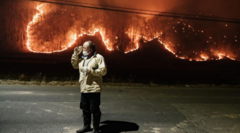
The southeastern region of South Korea is currently engulfed in its most catastrophic wildfires on record, a situation made worse by a trifecta of environmental factors: intense winds, dry terrain, and an abundance of resinous pine trees. As of Thursday, about 35,810 hectares (over 88,500 acres) have burned, equivalent to roughly half of New York City's area. The death toll has climbed to 27, with tens of thousands forced from their homes.Initial investigations suggest that human activity may have sparked these fierce wildfires, but experts underline the more significant aggravating elements as extremely dry land and gusty winds sweeping across southern regions. The concentration of pine trees, particularly in North Gyeongsang province where the fires are prevalent, significantly contributes to the rapid spread of the blaze. According to Lee Byung-doo from the National Institute of Forest Science in Seoul, the resin in pine trees increases the flames' intensity, leading to faster, more robust burns.Nature’s usual equilibrium takes a perilous turn in Andong, a city renowned for its serene pine forests. While such forests provide essential habitats for wildlife, they pose substantial risks during wildfires. Pine trees maintain their needles throughout the winter, making them prime candidates for "crown fires"—blazes that spread through the forest canopy and spread rapidly. Baek Min-ho, a disaster prevention expert, notes that the growing accumulation of fallen leaves and pine needles in South Korea’s once-dwindling forests further supports the undulating flames.Climate change adds another layer to the dilemma. South Korea’s disaster chief, Lee Han-kyung, spoke of how the current wildfire scenario illustrates the severe impacts of climate change, with recent temperature spikes making the already parched landscape even more flammable. Data from Climate Central indicates that these soaring temperatures could be up to five times more likely due to global warming effects.Amid the chaos, firefighting efforts are severely hampered by dense tree cover and the relentless winds in the region. The dangers extend beyond the flames themselves: on Wednesday, a 73-year-old pilot tragically lost his life in a helicopter crash while battling the fires, with several firefighters among the deceased.Elderly residents are suffering disproportionately from this disaster. Almost all of the initial fatalities involved individuals in their 60s and 70s, a demographic particularly vulnerable in South Korea’s aging society. North Gyeongsang is recorded as the second-oldest province in the nation, complicating evacuation efforts for those with mobility issues or other health concerns. Disturbingly, three residents from a care facility in Yeongdeok county died after their vehicle was engulfed by the flames, with only one managing to escape.Local officials, including Acting President Han Duck-soo, have expressed deep concern over the high casualty rate among the elderly and are taking steps to oversee relief efforts. As residents recount harrowing experiences, many feel unprepared for the disaster that struck without warning, leaving them with nothing but grief and loss. Furthermore, the significance of cultural heritage has not gone unnoticed, as cherished historical sites, including temples dating back over a millennium, have been reduced to ashes. The Gounsa temple, a marvel from the Silla dynasty, stands among many structures that have succumbed to the relentless fires.As South Korea grapples with the immediate impacts of this environmental catastrophe, the interlinked issues of climate change and forest management raise pressing questions for future preparedness and risk mitigation strategies.
