
In brief
Israel's ban on the UNRWA, citing alleged links to terrorist activities, threatens vital aid to Gaza's population, which is heavily reliant on the agency's support. The decision faces international backlash and raises concerns over the future of humanitarian assistance in the region.
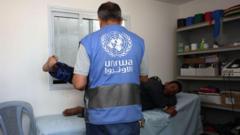
Article Text:Israel's parliament has voted to ban the United Nations Relief and Works Agency for Palestine Refugees, known as UNRWA, from operating within Israel and occupied East Jerusalem. This legislation prohibits any contact between UNRWA employees and Israeli officials, thereby hindering its functions in Gaza and the Israeli-occupied West Bank. With over two million residents of Gaza reliant on its aid and services, this ban has led to widespread outcry, as UNRWA cautions that the new law may soon disrupt crucial supply chains.Israel has defended the ban, reiterating its claims that numerous UNRWA staff were implicated in the attacks carried out by Hamas on October 7, 2023, which resulted in the fatalities of approximately 1,200 individuals. However, Israel's longstanding opposition to UNRWA predates these events. Established in 1949, UNRWA provides humanitarian support to Palestinians forced from their homes during the state of Israel's founding. It has evolved to become the principal UN agency operating in Gaza, employing around 13,000 individuals and running essential services, including healthcare, education, and food distribution.Despite its vital role, UNRWA faces criticism from Israeli officials, some of whom argue that its existence perpetuates the notion of inherited refugee status among Palestinians, complicating the peace process. They also object to content in UNRWA’s educational materials, which they claim promote anti-Israel sentiments and incite violence. In 2022, an Israeli watchdog accused the agency of teaching students that Israel seeks to erase Palestinian identity, and similar allegations have arisen from the European Commission.The ban has drawn ire from multiple international actors, with many fearing its implications for humanitarian operations. Following the October 7 attacks, allegations surfaced about the involvement of some UNRWA employees with terrorist organizations, prompting a temporary freeze of funding from 16 Western countries. While the UN investigated these claims, only a handful of employees were dismissed, and UNRWA has denied any broader collusion with Hamas.As a result of the recent legislation, UNRWA advocates warn it will be near impossible to maintain its operation in Gaza, where it conducts vital aid distribution through various centers. This process typically relies on coordination with Israeli officials to navigate checkpoints and deliver essential supplies. UNRWA's director emphasized that without this collaboration, international staff may face significant operational barriers, raising concerns that critical aid levels could plummet.In the wake of the ban, Israeli Prime Minister Benjamin Netanyahu assured continued humanitarian assistance for Gazans through alternative channels. Nonetheless, the U.S. State Department has urged Israel to enhance access for international aid personnel, citing the pressing need for improved humanitarian conditions. As the region grapples with escalating turmoil, the dissolution of UNRWA’s operations represents a new challenge to an already precarious humanitarian landscape in Gaza and the West Bank.
