In a notable shift in Ghana's political landscape, former President John Mahama has been officially declared the winner of Saturday's presidential election, claiming 56.6% of the votes compared to Vice-President Mahamudu Bawumia's 41.6%. This victory marks the largest margin in 24 years and comes amid a tumultuous economic climate characterized by high unemployment rates and rising living costs. Voter turnout was recorded at 60.9%, as announced by Jean Mensa, the head of Ghana's electoral commission.
In his victory speech, Mahama expressed gratitude and humility, stating that he and his party, the National Democratic Congress (NDC), had achieved "one of the best results in the electoral history of Ghana." He acknowledged the historic appointment of Jane Naana Opoku Agyemang as the country's first female Vice-President, a milestone for the nation.
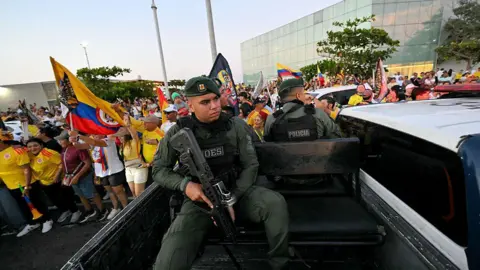
Mahama's triumph is viewed as a breath of fresh air for many Ghanaians, who took to the streets in jubilant celebration, waving flags and cheering for the anticipated changes. Supporters are hopeful that Mahama's return to power will address critical issues such as unemployment and the high cost of living, particularly within the agricultural sector.
Despite the celebratory atmosphere, the election was not without its challenges. There were reports of violence, with two fatalities occurring during separate incidents on election day. Additionally, frustrations lingered over delays in announcing the official results, which some attributed to tensions surrounding the electoral process.
Mahama’s political journey has been marked by resilience; he previously served as President from 2012 to 2017 before being succeeded by Nana Akufo-Addo. His recent win signifies a remarkable comeback, as he also lost the 2020 election. The NDC and the ruling New Patriotic Party (NPP) have alternated power since the 1992 return to multi-party politics, with neither winning more than two consecutive terms—an enduring trend that now continues.
With a commitment to transforming Ghana into a "24-hour economy," Mahama's administration is expected to face numerous challenges stemming from his previous terms, which were affected by economic instability and public discontent. However, he and his supporters are determined to create a more prosperous future for the nation.
The newly elected president will officially take office on January 7, 2025, marking the beginning of what many hope will be Ghana's new chapter.