
In brief
The Masri family's heartbreaking journey through war-ravaged Gaza highlights the struggle to reunite children separated from their parents amidst ongoing violence. With reports of over 17,000 children left unaccompanied and rising death tolls, organizations like UNICEF face immense challenges in facilitating reunions in a landscape marked by trauma and instability.
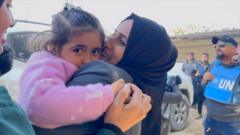
In the makeshift al-Mawasi tent camp of southern Gaza, the Masri cousins play and smile, concealing the trauma that has marked their recent past. Kawther al-Masri, their grandmother, recounts the unimaginable loss they endured when airstrikes demolished their home in the northern town of Beit Lahia, killing their parents and siblings. As one-year-old Jamal lost both parents, his cousins Maria, Jana, and Zeina lost their mother and two sisters, with their father detained by Israeli forces.As the conflict escalates, nearly 14,500 children have reportedly died, with thousands more injured or separated from their families. UNICEF reports staggering figures, with an estimated 17,000 children now unaccompanied or lacking proper guardianship. Tragically, some remain unidentified and too young to articulate their names amidst the chaos of war, where bombings and mass displacement have become commonplace. Yet, in this turmoil, UNICEF has successfully reunited only 63 children with their families.Kawther's ordeal is not unique; she initially received news that her family perished in the airstrike, only to later discover three of her grandchildren had survived. She immediately sought to bring them to safety. However, the reliance on humanitarian processes proved arduous; complicated by the military division of Gaza into northern and southern zones, their essential movement required careful coordination with military checkpoints.After undergoing medical care away from home, the Masri cousins prepared to reunite with their grandmother. In a poignant moment, she vividly described the joy of seeing them again after 14 long months apart. Despite joy amidst sorrow, their return is shadowed by the tragic knowledge that they are now orphans.The split between their family not only stems from loss but from displacement protocols initiated by Israel after escalating violence. As relatives have been detained or lost, many families live in limbo, uncertain about the fate of their loved ones, while human rights groups work tirelessly to identify and reunite separated families.Yet, as Kawther cares for her reunited grandchildren in the tent camp, she faces new fears. Winter approaches, bringing chilling temperatures that have led to an increase in pediatric hypothermia cases. UNICEF has provided them with essential aid, but risks persist for these vulnerable children. They are haunted by the sounds of war, fearing even the onset of night when they recall the horrific strikes.In her heart, Kawther holds hope for a ceasefire and a future for her grandchildren, wishing to break the cycle of violence that threatens to define their young lives. As she lovingly refers to them, she fears they may become lost in a cycle where childhood is stripped away by the realities of conflict. The ongoing situation in Gaza represents not just a struggle for survival but a hope for reunification and healing for countless families torn apart by war.

