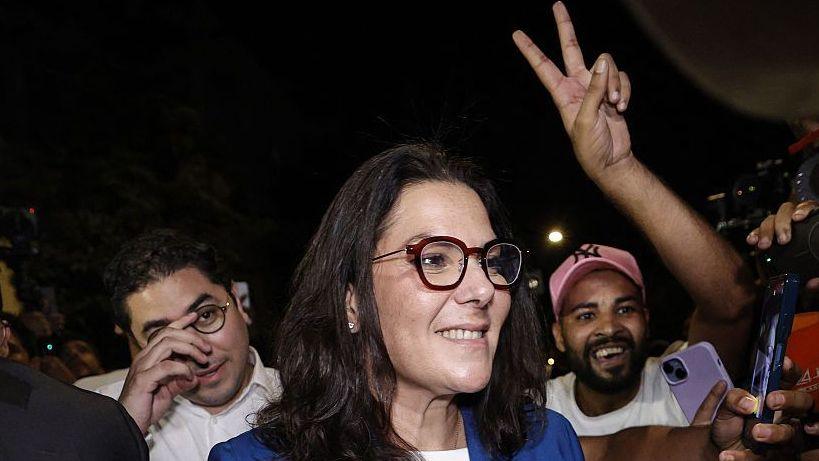
Fatima Zahra El Mansouri has been named Morocco’s first female prime minister, after her centrist Authenticity and Modernity Party (PAM) won the most seats in last week’s parliamentary elections.
Her appointment makes her only the second woman to lead a government in the Arab world, after Tunisia’s Najla Bouden.
El Mansouri, 50, was chosen by King Mohammed VI over fellow party member and former minister Fouzi Lekjaa. She has served as mayor of Marrakesh and as a minister in the previous coalition government.
Moro‑cco is a constitutional monarchy, but most power remains with the king.
A lawyer by training, she studied at Mohammed V University before furthering her education in France and the U.S., specialising in business and corporate law.
She entered politics with PAM in 2008, became Marrakesh’s first female mayor in 2009, and returned to the post after the 2021 elections.
In February 2024 she became co‑ordinator of PAM’s leadership coalition.
El Mansouri has rarely publicised positions on women’s rights, despite debates over polygamy and inheritance equality.
PAM holds 97 seats and will need to form a coalition to reach the 198 seats needed for a majority in the 395‑member parliament. Discussions continue on potential partners, after the National Rally of Independents fell out with PAM and the Islamist Justice and Development Party has opted to stay in opposition.
El Mansouri’s new role comes amid a broader context of Morocco’s political evolution, including recent normalisation agreements and ongoing discussions about Islam and policy.
Understanding the implications of this appointment requires close monitoring of coalition negotiations and the king’s influence in shaping Morocco’s future governance.