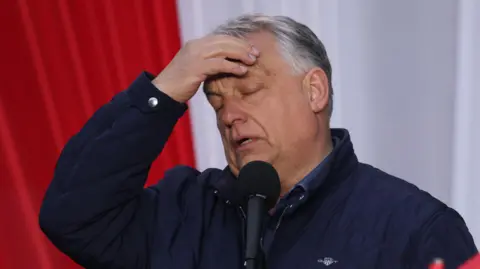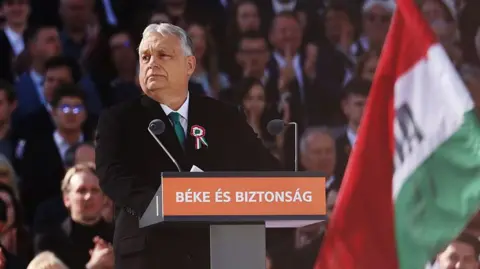
Viktor Orban's Fidesz government in Hungary stands accused of mass voter intimidation in a film released on Thursday ahead of 12 April parliamentary elections, in which the ruling party is trailing in the opinion polls.
The Price of the Vote documentary film, which aired on Thursday evening at a Budapest cinema and on YouTube, presents the results of a six-month investigation by independent filmmakers and reporters. In the film, voters, mayors, former election officials, and a police officer claim that large sums of money and even illegal drugs are being offered to pressure people to vote for Fidesz.
Fifty-three of Hungary's 106 individual constituencies, affecting up to 600,000 voters—potentially 10% of the expected turnout—are allegedly targeted. After 16 years of Fidesz rule under Orban, most recent polls indicate that the party is trailing Peter Magyar's centre-right opposition party Tisza by at least that margin.
All the constituencies involved are rural or small-town communities, and the film portrays a rural Hungary composed of a patchwork of poor villages, home mainly to the country's large Roma minority. Local mayors are described as exerting control over daily lives, providing jobs, firewood, and transport to polling stations in exchange for votes aligned with Fidesz.
The authorities did not provide a significant response to these allegations, with the only comment coming from a government minister suggesting that any wrongdoing should be released to the ministry of the interior for further investigation. In January, Orban addressed local mayors, emphasizing that their involvement could determine the election outcome.
The documentary juxtaposes Orban’s calls for local engagement with accounts from citizens across Hungary’s 19 counties, raising concerns about a coordinated effort orchestrated by Fidesz officials. As the election approaches, the prevailing atmosphere is tainted by debates over domestic and foreign plots allegedly designed to undermine a fair voting process, amidst accusations of Russian interference in support of Orban.
With the elections looming and public sentiment growing restless, both independent media and opposition parties are keenly observing the ruling party's tactics, especially given allegations previously limited to localized instances of vote-buying that have now escalated to broader, systemic claims.
The Price of the Vote documentary film, which aired on Thursday evening at a Budapest cinema and on YouTube, presents the results of a six-month investigation by independent filmmakers and reporters. In the film, voters, mayors, former election officials, and a police officer claim that large sums of money and even illegal drugs are being offered to pressure people to vote for Fidesz.
Fifty-three of Hungary's 106 individual constituencies, affecting up to 600,000 voters—potentially 10% of the expected turnout—are allegedly targeted. After 16 years of Fidesz rule under Orban, most recent polls indicate that the party is trailing Peter Magyar's centre-right opposition party Tisza by at least that margin.
All the constituencies involved are rural or small-town communities, and the film portrays a rural Hungary composed of a patchwork of poor villages, home mainly to the country's large Roma minority. Local mayors are described as exerting control over daily lives, providing jobs, firewood, and transport to polling stations in exchange for votes aligned with Fidesz.
The authorities did not provide a significant response to these allegations, with the only comment coming from a government minister suggesting that any wrongdoing should be released to the ministry of the interior for further investigation. In January, Orban addressed local mayors, emphasizing that their involvement could determine the election outcome.
The documentary juxtaposes Orban’s calls for local engagement with accounts from citizens across Hungary’s 19 counties, raising concerns about a coordinated effort orchestrated by Fidesz officials. As the election approaches, the prevailing atmosphere is tainted by debates over domestic and foreign plots allegedly designed to undermine a fair voting process, amidst accusations of Russian interference in support of Orban.
With the elections looming and public sentiment growing restless, both independent media and opposition parties are keenly observing the ruling party's tactics, especially given allegations previously limited to localized instances of vote-buying that have now escalated to broader, systemic claims.