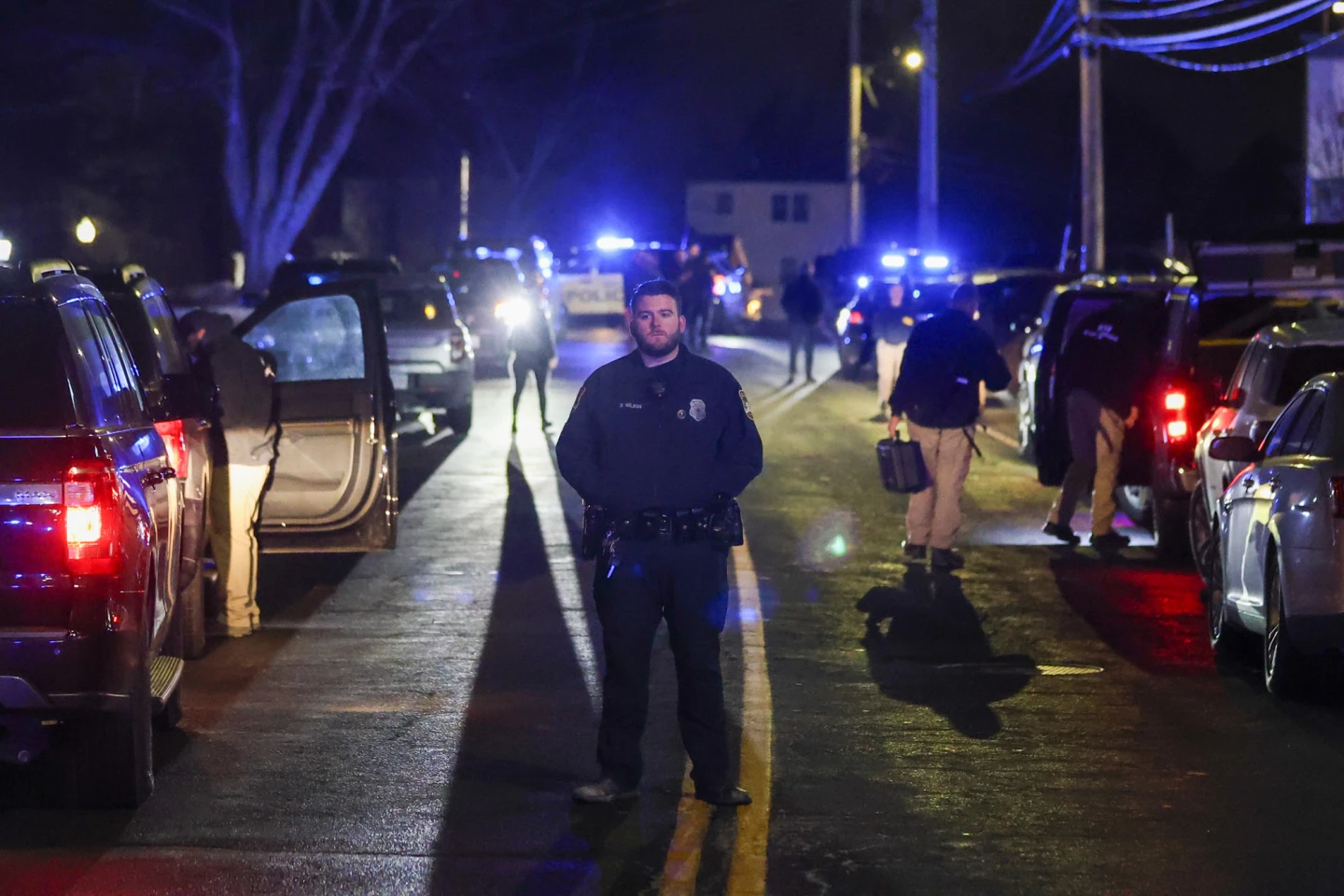
The recent mass shooting incident at Brown University has shocked the community and raised numerous questions regarding safety and background checks within educational institutions. Last Saturday, a shooting occurred during a student lecture, leading to the deaths of two students and injuries to nine others. Ex-Brown student Claudio Neves Valente, 48, was identified as the suspected shooter and was found dead from a self-inflicted gunshot wound in a storage facility in New Hampshire on Thursday.
During the police investigations, authorities also linked Valente to the murder of Nuno F.G. Loureiro, a Massachusetts Institute of Technology professor, two days after the Brown shooting. Valente, who registered as a graduate student at Brown from 2000 to 2001, had no current affiliation with the university.
Investigations revealed that Valente had previously been a student alongside Loureiro at a Portuguese university. Following a long gap from academic life, he obtained legal permanent residency in the U.S. in 2017. Local and state authorities indicated that Valente acted independently, and the motives for his violent actions remain unclear.
In a significant development, a key witness who encountered Valente shortly before the first shooting provided crucial information, leading police to connect Valente to the crimes. This tip allowed investigators to utilize surveillance technology to track Valente's movements from Rhode Island to Massachusetts, ultimately leading to the discovery of his body.
The victims of the shooting included 19-year-old Ella Cook and 18-year-old MukhammadAziz Umurzokov, both students at Brown University, who were tragically shot during exam prep sessions. The community is now grappling with the aftermath of this tragic event and seeking justice for the victims.