---
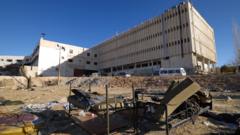
Jeremy Bowen reflects on the haunting conditions within Saydnaya prison, located ominously outside Damascus. Recently repainted in the colors of Syria's revolutionary flag, the prison stands as a façade for the horrors that unfolded inside, where over 30,000 detainees are believed to have perished since the civil war began in 2011. This facility has transformed into a crucial symbol of the brutality of Bashar al-Assad's regime, representing the very heart of fear and repression that characterized its rule.
While other prisons may have allowed families the hope of communication, Saydnaya's dark legacy lies in its infamy. Detainees faced extreme cruelty, reduced to urinating in plastic bags due to the overabundance of bodies crammed into its cells, which served not only as a prison but as a mass grave for many. Survivors and former prisoners are slowly revealing the unspeakable atrocities that occurred within.
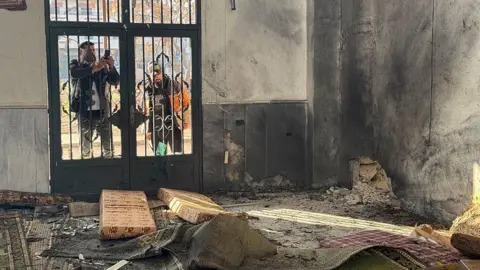
With the recent liberation of the prison, volunteers are working tirelessly to gather evidence of the regime’s human rights violations. Families scavenge through disarrayed records in search of information about their loved ones, holding onto hope for the possibility of justice. One volunteer, Safana Bakleh, emphasized the urgency of their mission, noting the lack of international support in documenting these crimes.
Emotions run high as family members navigate the prison’s desolate corridors, grappling with the reality of what has occurred. Many express a deep need for justice, longing for accountability from those responsible for their loved ones' suffering. Ahmed, a former inmate, poignantly shared his vision of justice — including a desire for Bashar al-Assad's punishment.
Compounding the demand for accountability, many harbor memories of the widespread corruption that existed under the regime, where monetary power often dictated prisoner fates. Families strained under financial burdens in their desperate attempts to secure the release of loved ones from the clutches of an unjust system, often finding their efforts in vain.
As Syria charts a path forward, the call for justice remains vital. The revelations within Saydnaya prison serve as a reminder of the necessity of facing the dark realities of the past to forge a reconciled future. Amidst desolation, the collective yearning for justice can guide Syria towards healing and renewal as former detainees and worried families continue to seek answers and closure.
Jeremy Bowen reflects on the haunting conditions within Saydnaya prison, located ominously outside Damascus. Recently repainted in the colors of Syria's revolutionary flag, the prison stands as a façade for the horrors that unfolded inside, where over 30,000 detainees are believed to have perished since the civil war began in 2011. This facility has transformed into a crucial symbol of the brutality of Bashar al-Assad's regime, representing the very heart of fear and repression that characterized its rule.
While other prisons may have allowed families the hope of communication, Saydnaya's dark legacy lies in its infamy. Detainees faced extreme cruelty, reduced to urinating in plastic bags due to the overabundance of bodies crammed into its cells, which served not only as a prison but as a mass grave for many. Survivors and former prisoners are slowly revealing the unspeakable atrocities that occurred within.
With the recent liberation of the prison, volunteers are working tirelessly to gather evidence of the regime’s human rights violations. Families scavenge through disarrayed records in search of information about their loved ones, holding onto hope for the possibility of justice. One volunteer, Safana Bakleh, emphasized the urgency of their mission, noting the lack of international support in documenting these crimes.
Emotions run high as family members navigate the prison’s desolate corridors, grappling with the reality of what has occurred. Many express a deep need for justice, longing for accountability from those responsible for their loved ones' suffering. Ahmed, a former inmate, poignantly shared his vision of justice — including a desire for Bashar al-Assad's punishment.
Compounding the demand for accountability, many harbor memories of the widespread corruption that existed under the regime, where monetary power often dictated prisoner fates. Families strained under financial burdens in their desperate attempts to secure the release of loved ones from the clutches of an unjust system, often finding their efforts in vain.
As Syria charts a path forward, the call for justice remains vital. The revelations within Saydnaya prison serve as a reminder of the necessity of facing the dark realities of the past to forge a reconciled future. Amidst desolation, the collective yearning for justice can guide Syria towards healing and renewal as former detainees and worried families continue to seek answers and closure.