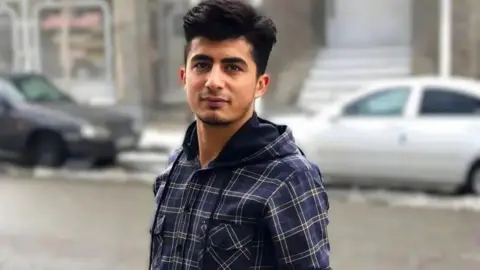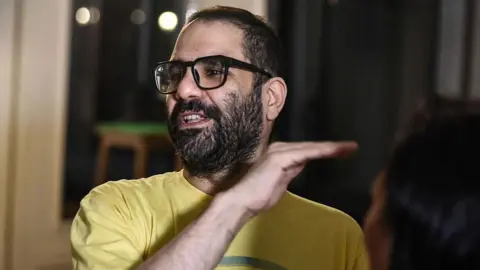
British-Egyptian democracy activist Alaa Abd El Fattah has apologised for several of his old tweets that have resurfaced, as calls grow for him to be deported from the UK days after he arrived following his release from an Egyptian jail.
Tory and Reform UK leaders have urged the home secretary to consider whether Abd El Fattah, a dual national, can be removed after social media messages surfaced in which he called for violence against police and 'Zionists.'
The Times reports that some senior Labour MPs are also calling for Abd El Fattah's citizenship to be revoked.
After reviewing his past posts, Abd El Fattah stated: I do understand how shocking and hurtful they are, and for that I unequivocally apologise. He expressed his shock at the resurfacing of his tweets just as he was being reunited with his family after twelve years.
Abd El Fattah insisted he took allegations of antisemitism seriously, stating that some of the posts had been distorted out of context.
Sir Keir Starmer faced criticism for expressing delight at Abd El Fattah's arrival in the UK, claiming he was unaware of the controversial historical messages. Conservative leader Kemi Badenoch and Reform UK leader Nigel Farage called on Home Secretary Shabana Mahmood to explore the possibility of revoking Abd El Fattah's citizenship.
Farage's letter to Mahmood stated, It should go without saying that anyone who possesses racist and anti-British views such as those of Mr el-Fattah should not be allowed into the UK.
The Foreign Office acknowledged its efforts to secure Abd El Fattah's release but condemned his posts as abhorrent.
Convicted in 2021 of spreading fake news in Egypt, Abd El Fattah had faced severe human rights violations during his imprisonment. He acquired British citizenship in December 2021 through his British mother, and officials are now examining the implications of his past statements on his current status.
In light of the resurfaced tweets, which include calls for violence against police and derogatory remarks towards white people, Shadow Home Secretary Chris Philp stated there is no excuse for such language and reiterated that individuals expressing extremist views should not be residing in the UK.
Dame Emily Thornberry, chair of the Commons foreign affairs committee, defended Abd El Fattah's citizenship, stressing that he is a British citizen entitled to protection and that the government had worked tirelessly for his return.
The Board of Deputies of British Jews has expressed concern over Abd El Fattah's past rhetoric, highlighting its potential risk to British Jews and the public. Local MPs and ministers face serious scrutiny over their prior support for his cause, amidst growing demands for accountability.
While admitting that some of his comments were indeed shocking, Abd El Fattah contends that others have been misinterpreted. He emphasized the context behind his comments, which he argues stemmed from a private discussion during a tumultuous political period in Middle Eastern history.
A prominent figure during the Egyptian uprising in 2011, Abd El Fattah has long supported democracy and human rights, and has faced severe repercussions for his activism, spending many years in jail.