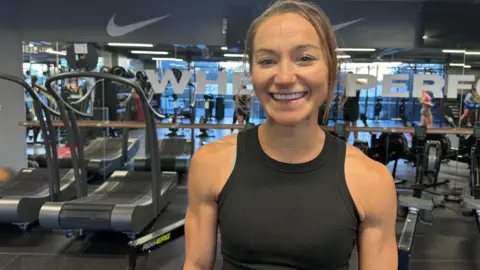
Serena Williams, one of the most prominent figures in sports history, has recently made headlines for her admission of using weight-loss drugs, an act she hopes will diminish the stigma associated with such medications. As a 43-year-old who has clinched 23 Grand Slam titles, Williams has long been perceived as the epitome of fitness and athletic excellence. Nevertheless, she openly acknowledges her battles with weight after having children, revealing that she considers excess weight to be an "opponent" she couldn’t defeat through traditional training methods alone.
On a recent episode of the Today Show, Williams explained her decision to explore weight-loss medication, particularly GLP-1 drugs, after observing friends benefit from their use. Despite engaging in rigorous training routines, including five hours of daily workouts, she ultimately felt the need to explore alternative solutions. Throughout her journey, she has successfully lost 31 pounds (14 kg) over the course of eight months, but emphasizes that the medication route was not a simple shortcut.
While Williams aims to inspire confidence among individuals contemplating weight-loss medications, some critics voice skepticism regarding the timing of her admission. She recently became a spokesperson for Ro, a company that markets GLP-1 medications, and her husband is an investor—causing some to question the authenticity of her motivations.
Discussion surrounding weight-loss drugs often carries negative connotations, as Caleb Luna, an assistant professor at the University of California, notes. He argues that Williams's visibility may break down stereotypes labeling users as lazy, yet there are concerns that it could unintentionally promote a culture that undermines the significance of hard work and dedication. Williams’s accomplishments, which would normally inspire admiration, can sometimes be overshadowed by societal pressures surrounding body image.
Despite her own career accomplishments, Williams remains acutely aware of how external expectations can loom large, even for elite athletes. She is joined by a growing number of public figures, such as Oprah Winfrey and Whoopi Goldberg, who have also shared their weight-loss drug experiences, changing the narrative around these treatments.
Jennifer Madigan, a senior research associate in behavioral medicine, echoes this sentiment by pointing out the challenges elite athletes face in transitioning to everyday life, particularly regarding weight and caloric intake. She praises Williams for not solely attributing her success to the medication but rather recognizing the essential combination of diet and exercise alongside it.
As Williams looks ahead, aiming for what she describes as a "healthy weight" while preparing for a half marathon, her experience emphasizes dual narratives: one of personal honesty, and another burdened by the expectations of societal standards. The conversations her admission provokes could be vital in reshaping how obesity treatments are viewed in society, while also reinforcing the complexities surrounding body image and self-worth.