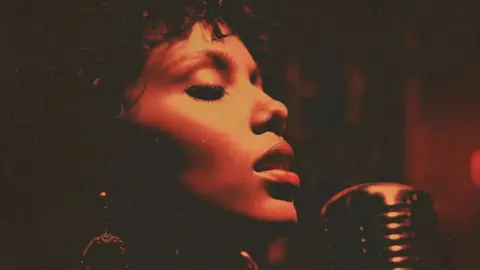
Sienna Rose is having a spectacular month, with three of her dusky, jazz-infused soul songs charting in Spotify's Viral Top 50. The most popular track, a ballad titled Into The Blue, has been streamed over five million times, suggesting she might become one of the year's breakout stars. Yet, an unsettling question looms: Is she even real?
Streaming service Deezer has indicated that many of Rose’s songs are flagged as computer-generated. Upon investigation, it was revealed that Rose lacks a social media presence, has never performed live, and released an astonishing 45 tracks in a mere two months.
Her Instagram account, now deactivated, showcased an uncanny series of uniform headshots, hinting at generated images. The music itself presents an uncanny mix—smooth vocals and jazzy guitar lines reminiscent of artists like Norah Jones, yet listeners have reported the presence of distinctive AI artifacts that suggest artificial creation.
The very nature of her rise prompts broader discussions about the role of AI in music production. As AI technologies improve, they create artists who can earn significant royalties while requiring minimal investment. The allure for record labels is clear, especially in contrast to the high expenditures involved in developing traditional artists.
However, this phenomenon is not without backlash. Notably, a song by a supposed AI artist was recently banned in Sweden after it was discovered that the artist did not exist. The growing concern among artists and listeners alike centers around the emotional authenticity of music being produced by algorithms.
As the line blurs between human-created music and AI-derived content, the music industry faces a critical moment of reflection. Whether Sienna Rose is a true artist or an AI experiment, her story underscores the challenges and questions modern music now grapples with. Fans are left hoping that the emotional core of music will prevail over algorithmic creations.