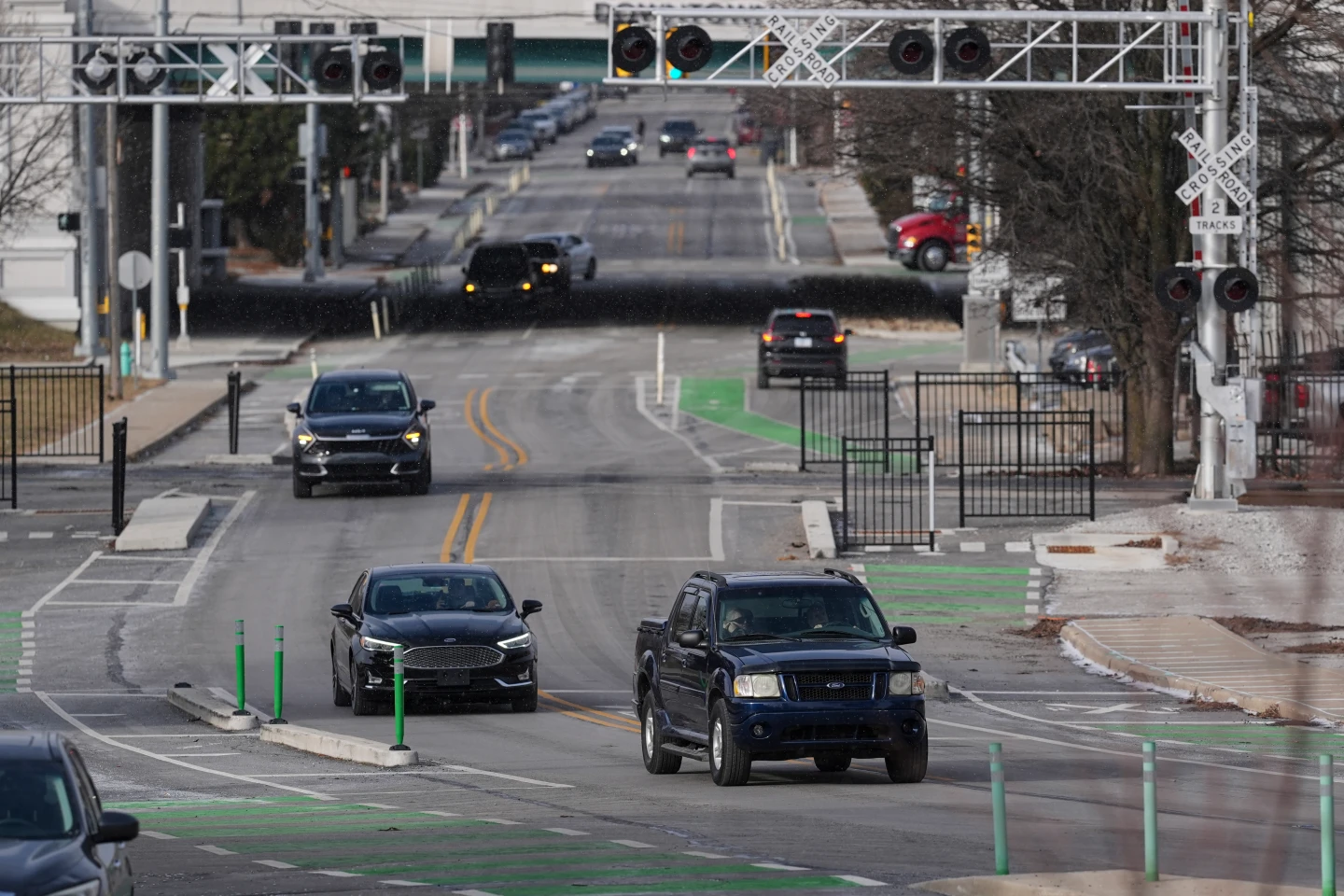
Excessive speeding was commonly associated with the one-way streets past a major electronics plant in Indianapolis, drawing comparisons to a raceway. These roads, initially two-way thoroughfares, became one-way in the 1970s to facilitate RCA employees. However, with the plant's closure in 1995, the allure of speed led to safety concerns.
Recent changes by city officials have converted Michigan and New York streets back to two-way, sparking transformation in community perception. The opening and conversion of those streets has just been transformative for how people think about that corridor, stated James Taylor, a local community center director.
More U.S. cities, particularly midsize ones, are adopting this strategy to improve safety and make urban areas more attractive to consumers. City planners argue that two-way streets promote walkability, crucial for enhancing local business vitality.
While one-way streets were believed to streamline traffic, experts contend that they increase pedestrian risk. Dave Amos, a city planning professor, noted that one-way streets focus on fast vehicle movement, inadvertently marginalizing the needs of pedestrians and cyclists.
A Street Design U-Turn
One misconception is that one-way streets are inherently safer due to their directional traffic. However, urban planning experts like Wade Walker highlight that combining one-way and two-way streets can complicate navigation and increase conflict points for pedestrians.
This is evident in Louisville, Kentucky, where the city is working to restore two-way streets to foster better community connectivity and revive local businesses.
Community Resistance and Acceptance
Transitioning streets has faced skepticism. For example, Rodney Taylor in Lynchburg, Virginia, initially feared for his restaurant's accessibility after reverting his street to two-way. Post-conversion, he found that the project didn’t negatively impact his business as initially thought.
Similarly, in Austin, Texas, many residents have grown to appreciate the conversion of one-way streets, prompting a push for more extensive changes.
Future Developments in Indianapolis
Following the recent renovation of Michigan and New York streets, Indianapolis plans to implement ten more conversions, with an estimated budget of $60 million supported by federal grants. As the community adapts, business owners express optimism about emerging opportunities along these newly revitalized streets.
As Taylor concludes, the revised streets may feel unfamiliar to longtime residents, but they symbolize a fresh approach to urban living and connectivity.