Iceland has joined Spain, Ireland, Slovenia and the Netherlands in saying it will boycott the 2026 Eurovision Song Contest.
All five countries have withdrawn after Israel's participation in the competition was officially confirmed last week.
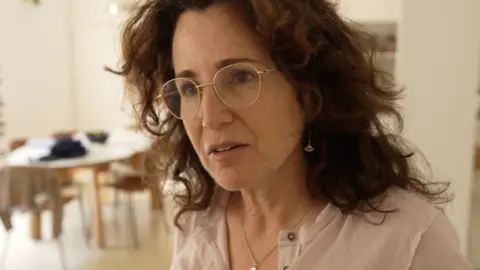
Stefan Eiriksson, director-general of Icelandic national broadcaster RÚV, said: There is no peace or joy connected to this contest as things stand now. On that basis, first and foremost, we are stepping back while the situation is as it is.
RÚV said Israel's participation had created disunity among both members of the European Broadcasting Union (EBU) and the general public.
The broadcaster's board agreed the decision at a meeting on Wednesday, hours before the deadline for countries to confirm whether they will join what's supposed to be a celebratory 70th anniversary edition of the song contest next May.
Iceland was believed to be the last remaining country to announce its decision.
Eurovision director Martin Green said: We respect the decision of all broadcasters who have chosen not to participate in next year's Eurovision Song Contest and hope to welcome them back soon.
Israel's presence at Eurovision has been an increasing source of tension, because of the war in Gaza and concerns about the voting and campaigning processes, including accusations that Israel's government tried to influence the public vote at this year's event.
A new raft of measures designed to protect the integrity of the vote was approved at an EBU summit last week, after which most countries confirmed they would travel to Vienna for the 2026 contest.
The Icelandic broadcaster's board had previously approved a recommendation to ask the EBU to ban Israel from Eurovision 2026.
Iceland was reportedly among seven countries that then requested a vote at the EBU general meeting on Israel's participation. That request was denied, and Israel's future participation was instead effectively tied to a ballot on the new voting and campaigning rules.
The Icelandic broadcaster said that while the new measures addressed many of its concerns, it believes that there are still doubts whether the agreed adjustments would be fully satisfactory.
RÚV has repeatedly raised concerns that various Icelandic stakeholders, such as artist associations and the general public, were opposed to participation in the contest.
Furthermore, RÚV had requested the EBU to exclude [Israeli public broadcaster] KAN from the contest in accordance with precedents.
It is a complex matter which has already damaged the contest's reputation and EBU, emphasizing the necessity of a solution for all concerned parties.
Meanwhile, Poland confirmed on Wednesday that it will take part in next year's contest. We are aware of the scale of tensions surrounding the upcoming edition. We understand the emotions and concerns, broadcaster TVP said.
However, we believe that Eurovision still has a chance to once again become a space filled with music - and only music. We are giving it that chance, just as the vast majority of EBU members are.