In the 11th century, while Europe struggled through its Middle Ages, a powerful force was rising in the south - India's Chola dynasty. This flourishing empire, under the leadership of King Rajaraja Chola, constructed the Brihadishvara temple, a UNESCO World Heritage site that would become a symbol of architectural grandeur. Completed in 1003 CE, this colossal temple stood at 216 feet (66 meters) and was built from a staggering 130,000 tonnes of granite. At its core, it housed a 12-foot tall statue of the Hindu god Shiva, covered in gold, rubies, and pearls.
The temple contained 60 exquisite bronze sculptures and a wealth of treasures, including gold and silver coins plundered from rival kingdoms. Rajaraja's reign marked the Chola dynasty as a pioneering force of the medieval world, yet remarkably, their legacy remains obscure outside India.
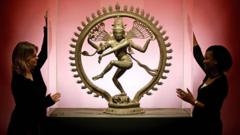
Initially part of the Kaveri floodplain's multitude of competing powers, the Cholas rapidly distinguished themselves through innovation and military prowess. The dynasty showcased an extraordinary level of female representation with influential queens, including Rajaraja's great-aunt, Sembiyan Mahadevi. Her efforts to restore ancient shrines significantly elevated the family's standing as fervent devotees of Shiva, further popularizing Nataraja, the King of Dance, as a representation of Chola identity.
Rajaraja harnessed the riches from military conquests to fund his architectural masterpieces, particularly the Brihadishvara temple, which received immense support from taxes and agricultural output. This economic might translated into a vibrant state, investing heavily in public works, irrigation systems, and extensive animal husbandry.
Rajaraja Chola’s successor, Rajendra, built vital trade alliances with Tamil merchant companies, creating a partnership between governmental authority and commerce that prefigured the practices introduced by later colonial powers such as the British East India Company. In 1026, Rajendra's naval expeditions expanded trade networks in Southeast Asia, with archaeological findings revealing a wave of Tamil merchants established in the Bay of Bengal, influencing global commerce.
These Tamil merchants reached far-off lands, with evidence of their success in contemporary China, where they even established a temple to Shiva during Mongol rule. Fast forward to the 19th century, and Tamils dominated administrative roles in Southeast Asia under British colonial rule, showcasing their pioneering legacy.
The Chola era birthed enormous temples and vibrant marketplaces, illustrating India's cultural and economic centrality in global trade networks. Their influence extended well beyond borders, as copper, tin, and exotic woods were sourced from as far as Egypt and Southeast Asia, culminating in a rich tapestry of multicultural interactions.
Meanwhile, the period was marked by exceptional advancements in art and literature. The renowned Tamil bronzes of the era, particularly those crafted for temple worship, display artistry that rivals the greats of Renaissance Europe. Poets of the time developed a unique narrative style that combined themes of religion, history, and fantasy.
The Chola dynasty significantly shaped urban life, creating bustling temple towns that facilitated a remarkably diverse community of individuals from various backgrounds and beliefs. These towns became one of the building blocks of modern Tamil Nadu, one of India's most urbanized areas.
With their remarkable achievements, the Cholas underscore an era of political innovation, extensive maritime connections, and unrivaled artistic expression that remains largely untold today. Colleges and museums worldwide house remnants of this rich history, embodying the Chola legacy, a confluence of power, culture, and commerce that offers vital insights into our interconnected world.
Anirudh Kanisetti's work, "Lords of Earth and Sea: A History of the Chola Empire," presents a detailed exploration of this remarkable dynasty's contributions and influence, shedding light on a chapter of history that continues to resonate today.