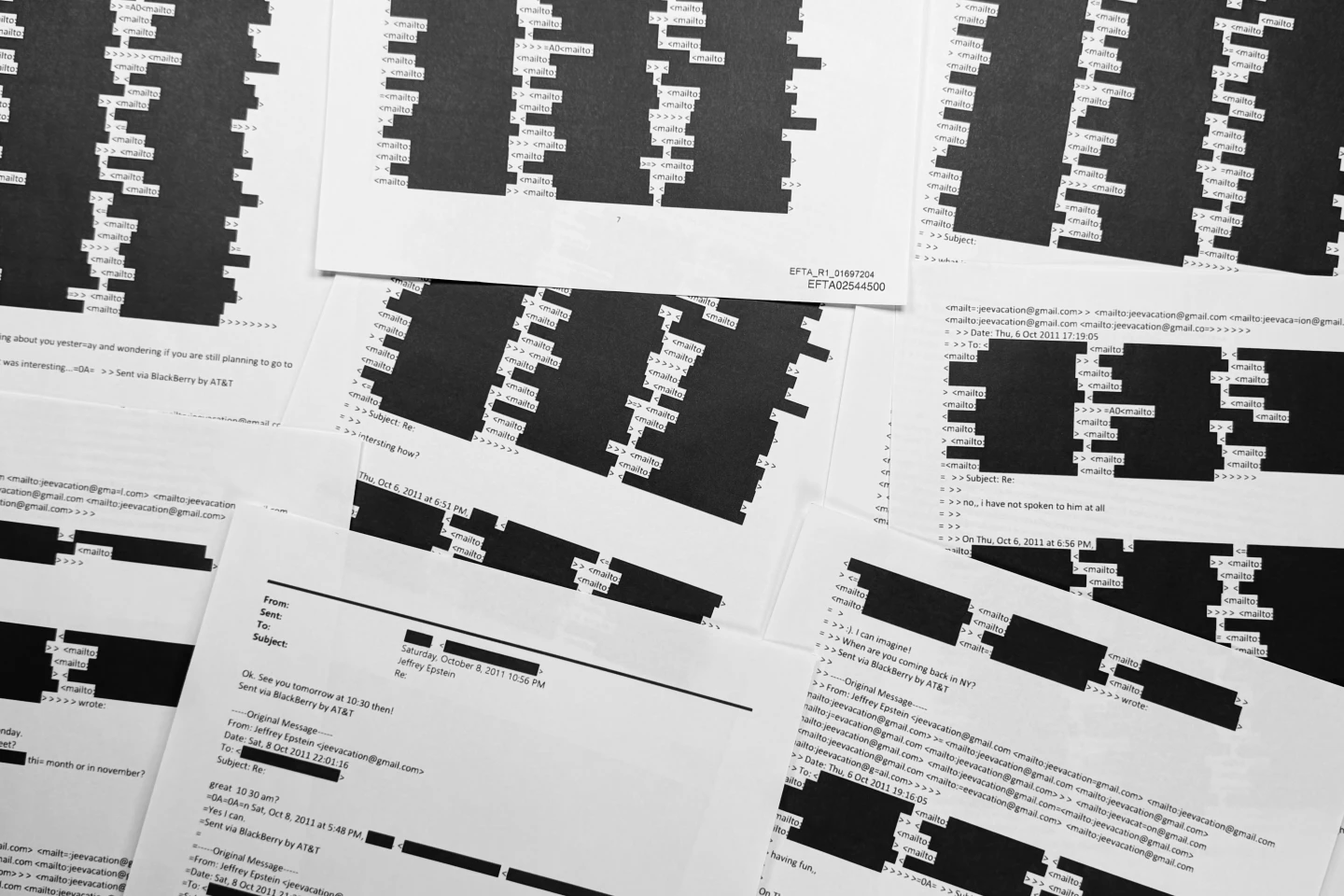
NEW YORK (AP) — In a shocking lapse of judgment, the U.S. Justice Department released documents related to Jeffrey Epstein that included highly sensitive information—nude photos, names, and bank account details—all supposed to be redacted under privacy laws. Recently, these disturbing revelations have spurred protests from victims' advocates and raised pressing concerns regarding the safeguarding of private information.
Documents released on February 1, 2026, as part of a mandated disclosure law aimed at making Epstein's investigation more transparent, instead laid bare numerous oversights, exposing the very individuals it intended to protect. Many mentioned that the files still contain numerous unredacted personal identifiers despite promises of confidentiality.
Annie Farmer, an alleged victim, expressed her anger at the revelation of her private information, already known from her previous public statements. Farmer has called for accountability within the Justice Department, emphasizing that the failure is much more than a simple mishap—it's a failure to uphold the safety of individuals whose lives have already been irrevocably altered.
In addition to the personal data breaches, the investigation revealed glaring inconsistencies—including photos where nude women appeared fully visible despite stated redaction guidelines. Victim advocates have uniformly condemned the release of such graphic material, calling it a blatant disregard for human dignity and privacy.
As the outcry grows, lawmakers and activists are demanding that proper channels be established to ensure accuracy and safety when handling sensitive victim-related information. Proposals have included requests for an independent oversight mechanism to scrutinize future releases. Meanwhile, the Justice Department has acknowledged the errors and stated they are working diligently to correct the oversights, a task complicated by the sheer volume of files.
In this cautionary tale, the Epstein scandal continues to unfold, not only highlighting the complexities of legal accountability but also underscoring an urgent need for reform in how these matters are handled to prevent future breaches of trust.