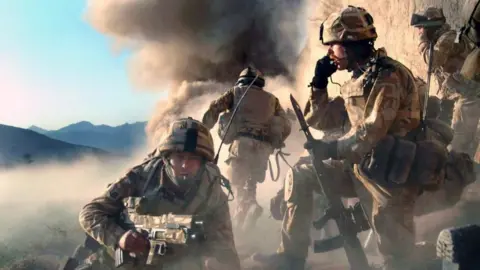
Blast walls, rocket attacks, Forward Operating Bases (FOBs), Improvised Explosive Devices (IEDs)... and long queues in the canteen. Anyone who deployed to Afghanistan, in whatever role, between 2001-2021 will have their own vivid memories of that time.
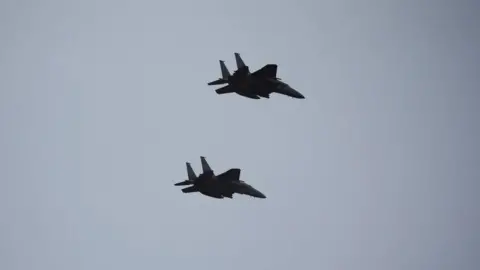
It started with the flight in – to Kandahar, Kabul or Camp Bastion. It could be a long, slow descent with the lights out on an RAF jet, or a rapid, corkscrew down in a C-130 transport plane. In both cases the aim was to avoid being blown out of the air by a Taliban surface-to-air missile.
Over the course of 20 years thousands of servicemen and women, as well as civilians, from dozens of countries deployed to Afghanistan, answering the US call for assistance.
That call came in the form of invoking Nato's Article 5 of its charter – the only time it has ever happened in Nato's 77-year history – which states that an attack on one member shall be deemed an attack on all.
America was reeling from the devastating 9/11 attacks when al-Qaeda, which was being sheltered by the Taliban in Afghanistan, murdered nearly 3,000 people by flying packed airliners into New York's Twin Towers and the Pentagon in Washington.
The Taliban were swiftly driven from power in a joint effort by the US military, the CIA and Afghanistan's Northern Alliance. Then it was all about trying to hunt down the remnants of al-Qaeda as Britain's Royal Marines, together with UK Special Forces, pursued them over the mountains but many escaped to safety to regroup in Pakistan.
It was not until ten years later that the US Navy's Seal Team Six commandos tracked down the al-Qaeda leader, Osama Bin Laden, in a villa in Abbottabad, Pakistan.
The first two years of the US-led Operation Enduring Freedom were relatively quiet. However, the situation quickly escalated after the UK deployed in force to Helmand province, leading to intense conflicts and a strong response from the Taliban.
Over the next eight years, until the end of combat operations in 2014, it was not just Americans who were risking life and limb to serve in Afghanistan. Brits, Canadians, Danes, and Estonians were among those who saw the toughest fighting in Kandahar and Helmand provinces. It would also be churlish to ignore the bravery and sacrifice of so many Afghans who fought and died over two decades.
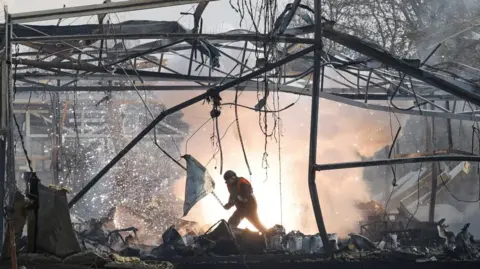
These service members faced pervasive threats from IEDs, which could irreparably change lives in split seconds. As documented by many, these hidden dangers posed the greatest fear for soldiers on the ground.
Despite the harrowing experiences and life-changing injuries endured, many soldiers displayed resilience and courage, working to rebuild their lives post-conflict. The sacrifices made by troops who answered America's call for help after the 9/11 attacks resonate to this day, provoking rightful outrage at claims suggesting otherwise.