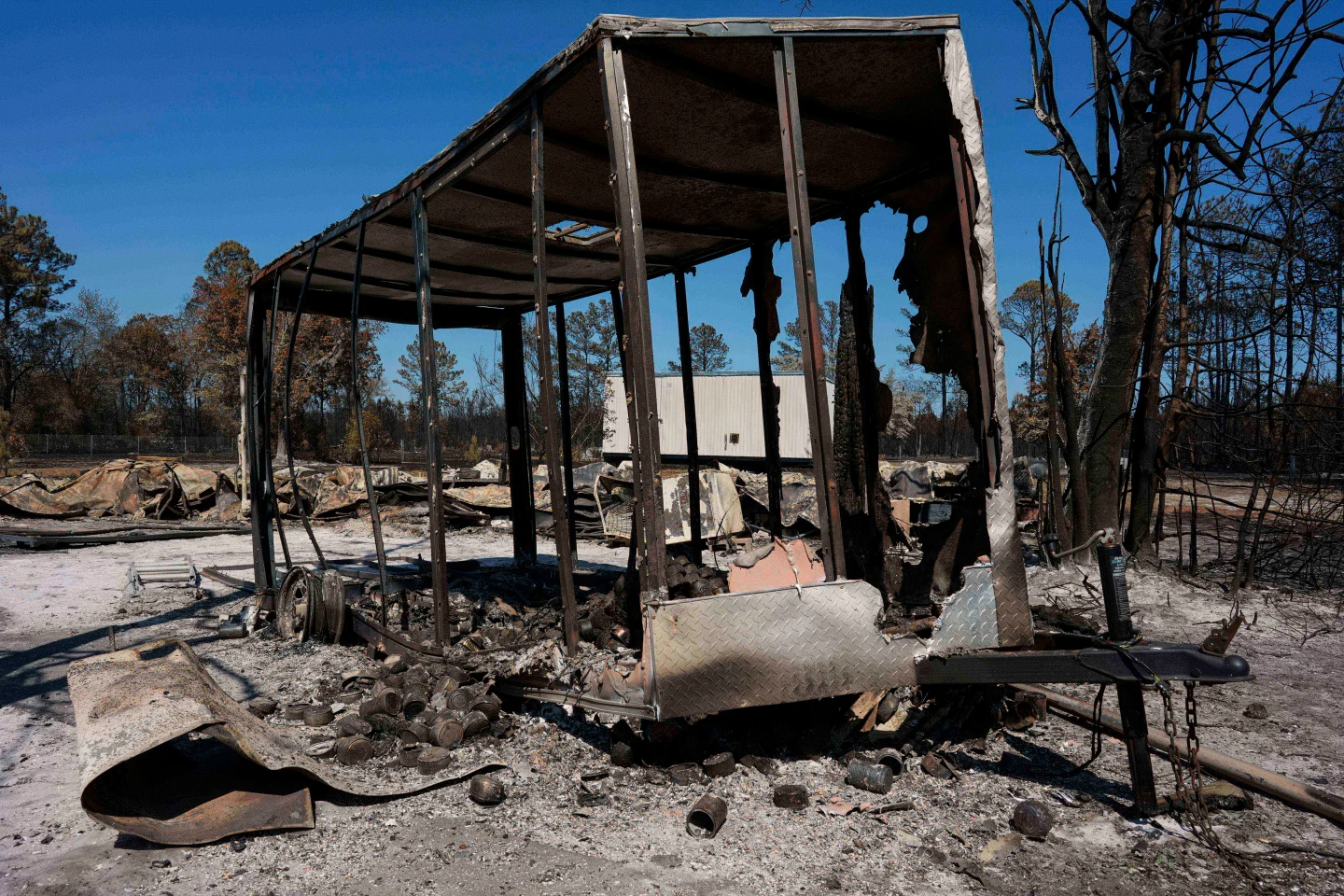
JUNEAU, Alaska (AP) — More rain and wind were forecast Wednesday along the Alaskan coast where two tiny villages were decimated by the remnants of Typhoon Halong, and officials were scrambling to find shelter for more than 1,500 people driven from their homes. The weekend storm brought high winds and surf that battered the low-lying Alaska Native communities along the Yukon-Kuskokwim Delta in the southwestern part of the state, nearly 500 miles from Anchorage. At least one person was killed and two went missing. The Coast Guard plucked two dozen people from their homes after the structures floated out to sea.
Hundreds were staying in school shelters, including one with no working toilets, officials said. The weather system followed a storm that struck parts of western Alaska days earlier. Across the region, more than 1,500 people were displaced. Dozens were flown to a shelter set up in the National Guard armory in Bethel, a community of 6,000, and officials were considering flying evacuees to longer-term shelter or emergency housing in Fairbanks and Anchorage.
The hardest-hit communities included Kipnuk, population 715, and Kwigillingok, population 380. They are off the state’s main road system and reachable this time of year only by water or by air. “It’s catastrophic in Kipnuk. Let’s not paint any other picture,” Mark Roberts, incident commander with the state emergency management division, told a news conference Tuesday. “We are doing everything we can to continue to support that community, but it is as bad as you can think.”
Among those awaiting evacuation was Brea Paul, from Kipnuk, who described witnessing homes floating away in the moonlight. She and her neighbors gathered in the local school gym, singing songs and supporting one another as they faced an uncertain future.
Search efforts were called off for two men whose home floated away near Kwigillingok, where severe damage was reported. Inappropriate school facilities added to the burden on evacuees, with the only operational facility lacking proper sanitation.
With winter approaching, officials highlighted a long road to recovery, stating that rebuilding would be challenging with many homes rendered uninhabitable. Rick Thoman, an Alaska climate specialist, noted the link between warming ocean waters and the intensity of storms, raising alarms about future climatic patterns affecting Indigenous communities in Alaska.
Hundreds were staying in school shelters, including one with no working toilets, officials said. The weather system followed a storm that struck parts of western Alaska days earlier. Across the region, more than 1,500 people were displaced. Dozens were flown to a shelter set up in the National Guard armory in Bethel, a community of 6,000, and officials were considering flying evacuees to longer-term shelter or emergency housing in Fairbanks and Anchorage.
The hardest-hit communities included Kipnuk, population 715, and Kwigillingok, population 380. They are off the state’s main road system and reachable this time of year only by water or by air. “It’s catastrophic in Kipnuk. Let’s not paint any other picture,” Mark Roberts, incident commander with the state emergency management division, told a news conference Tuesday. “We are doing everything we can to continue to support that community, but it is as bad as you can think.”
Among those awaiting evacuation was Brea Paul, from Kipnuk, who described witnessing homes floating away in the moonlight. She and her neighbors gathered in the local school gym, singing songs and supporting one another as they faced an uncertain future.
Search efforts were called off for two men whose home floated away near Kwigillingok, where severe damage was reported. Inappropriate school facilities added to the burden on evacuees, with the only operational facility lacking proper sanitation.
With winter approaching, officials highlighted a long road to recovery, stating that rebuilding would be challenging with many homes rendered uninhabitable. Rick Thoman, an Alaska climate specialist, noted the link between warming ocean waters and the intensity of storms, raising alarms about future climatic patterns affecting Indigenous communities in Alaska.