Recent research has made alarming discoveries regarding deep-sea mining, revealing that it drastically impacts marine life on the seabed. According to scientists from the Natural History Museum in London and the University of Gothenburg, the number of animals in areas disturbed by mining machinery dropped by 37% compared to untouched regions.
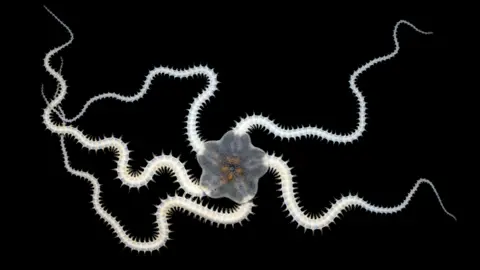
This comprehensive study, which cataloged over 4,000 sea creatures in the Pacific Ocean's Clarion-Clipperton Zone, found that 90% of these creatures were previously unknown species. The area is rich in polymetallic nodules containing essential minerals like nickel and cobalt, crucial for green technologies.
Despite the potential benefits of these minerals to fight climate change, the environmental consequences of deep-sea mining are still unclear, and the International Seabed Authority has not permitted commercial mining due to the significant risks posed to marine biodiversity. The research involved analyzing changes in biodiversity two years before and two months after test mining activities, focusing on small animals within 0.3mm to 2cm in size.
The machines used in the mining process remove about the top five centimeters of sediment, where most marine life resides. A decrease in species diversity by 32% was also observed in the affected pathways, raising concerns about the sustainability of current mining technologies. Some experts warn that even moderate mining could leave irreversible damage if commercial-scale extraction is permitted.
As society's reliance on these critical minerals grows and global demand is projected to double by 2040, the research underscores the urgency of balancing resource needs with ecological preservation. Activist groups and certain nations have called for a ban on such practices until the full effects on deep-sea ecosystems are understood. In light of these findings, the future of deep-sea mining remains a contentious and urgent issue in environmental discussions.
This comprehensive study, which cataloged over 4,000 sea creatures in the Pacific Ocean's Clarion-Clipperton Zone, found that 90% of these creatures were previously unknown species. The area is rich in polymetallic nodules containing essential minerals like nickel and cobalt, crucial for green technologies.
Despite the potential benefits of these minerals to fight climate change, the environmental consequences of deep-sea mining are still unclear, and the International Seabed Authority has not permitted commercial mining due to the significant risks posed to marine biodiversity. The research involved analyzing changes in biodiversity two years before and two months after test mining activities, focusing on small animals within 0.3mm to 2cm in size.
The machines used in the mining process remove about the top five centimeters of sediment, where most marine life resides. A decrease in species diversity by 32% was also observed in the affected pathways, raising concerns about the sustainability of current mining technologies. Some experts warn that even moderate mining could leave irreversible damage if commercial-scale extraction is permitted.
As society's reliance on these critical minerals grows and global demand is projected to double by 2040, the research underscores the urgency of balancing resource needs with ecological preservation. Activist groups and certain nations have called for a ban on such practices until the full effects on deep-sea ecosystems are understood. In light of these findings, the future of deep-sea mining remains a contentious and urgent issue in environmental discussions.