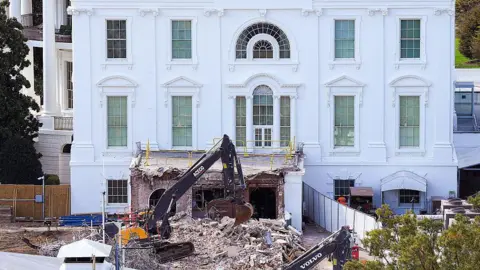
The U.S. Court of Appeals for the District of Columbia has ruled that construction for President Donald Trump’s White House ballroom may resume following an administrative stay. This decision overturns a prior ruling that suspended the project due to claims it had bypassed necessary procedures.
On Thursday, the appeals court responded to an appeal by the Trump administration against a ruling by U.S. District Judge Richard Leon, who had blocked construction earlier in March after a lawsuit was filed by the National Trust for Historic Preservation. The plaintiffs argued that the White House failed to properly file construction plans with the National Capital Planning Commission and did not seek congressional authorization for the project.
The appeals court ordered the judge to reconsider the implications of halting the construction in terms of national security. The decision allows construction to continue until the next hearing set for June 5, when further discussion regarding the project’s legal standing will unfold.
The ballroom project, which is set to include both underground and above-ground components, is significant to Trump’s vision for revamped White House facilities and is projected to cost approximately $400 million, with funding sourced entirely from private donations.
Trump has emphasized the importance of the ballroom for national security, stating that it will include bomb shelters and medical facilities, calling the project "vital" for U.S. military operations.
The initial halt came after Judge Leon expressed concerns that congressional approval was necessary and questioned the Trump administration's claim that it was a national security matter, citing the need for procedural transparency.
As the legal back-and-forth over the ballroom continues, the latest ruling marks a pivotal moment in Trump's drive to update the iconic structure, amidst ongoing scrutiny and debate over the project's implications.
On Thursday, the appeals court responded to an appeal by the Trump administration against a ruling by U.S. District Judge Richard Leon, who had blocked construction earlier in March after a lawsuit was filed by the National Trust for Historic Preservation. The plaintiffs argued that the White House failed to properly file construction plans with the National Capital Planning Commission and did not seek congressional authorization for the project.
The appeals court ordered the judge to reconsider the implications of halting the construction in terms of national security. The decision allows construction to continue until the next hearing set for June 5, when further discussion regarding the project’s legal standing will unfold.
The ballroom project, which is set to include both underground and above-ground components, is significant to Trump’s vision for revamped White House facilities and is projected to cost approximately $400 million, with funding sourced entirely from private donations.
Trump has emphasized the importance of the ballroom for national security, stating that it will include bomb shelters and medical facilities, calling the project "vital" for U.S. military operations.
The initial halt came after Judge Leon expressed concerns that congressional approval was necessary and questioned the Trump administration's claim that it was a national security matter, citing the need for procedural transparency.
As the legal back-and-forth over the ballroom continues, the latest ruling marks a pivotal moment in Trump's drive to update the iconic structure, amidst ongoing scrutiny and debate over the project's implications.