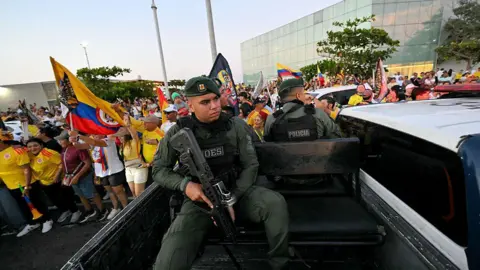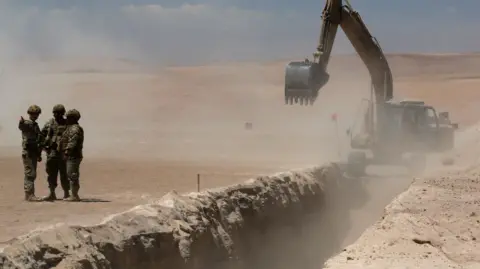
Chile's new president has begun work on a border barrier just five days after being sworn into office. José Antonio Kast appeared at the site along Chile's northern border with Peru on Monday to inspect the trench and chat with construction workers, hailing it as the first step towards meeting his campaign promise to stem illegal immigration.
Only a small portion of the planned barrier has so far been cut into the arid Atacama desert - a ditch a few feet wide and deep. It is one of several policies of Kast's that echo pledges by U.S. President Donald Trump, who has made constructing a wall at the Mexican border a common refrain at rallies and a crucial part of his own immigration policy.
Echoing his rhetoric on the campaign trail, Kast stated that Chile had been violated by illegal immigration, drug trafficking, and organized crime, asserting he wanted to use the diggers behind him to build a sovereign Chile. For all of Chile, this is a milestone, he said while at the site, near the border town of Arica.
Kast has portrayed Chile as a country descending into chaos and insecurity, and prior to his election pledged to restore order and implement sharp spending cuts. Chile is recognized as one of the safest and most stable countries in South America, but a rise in immigration and organized crime has sparked concern among its citizens.
Chile's foreign population has risen sharply in the past decade, from less than 600,000 in 2015 to more than 1.5 million in 2024, according to World Bank data. The governing body estimates that about 336,000 of these are undocumented migrants, many coming from Venezuela.
The trench-digging on Monday marks the start of the border shield promise that helped Kast win the presidency with 58% of the vote in December. The barrier will consist of trenches and fences, secured by military personnel, while surveillance systems and obstacles will be installed to deter crossings. The Chile-Peru border spans about 180km and the nation shares a further 900km with Bolivia; however, the barrier is projected to cover only half of this area.
Kast's election signifies the most prominent rightward shift in Chile since the end of its military dictatorship in 1990, openly praising Augusto Pinochet, the former dictator. He appears set to align with Trump on immigration issues, as many of his supporters have been seen sporting red Make Chile Great Again caps, reminiscent of Trump’s campaign.