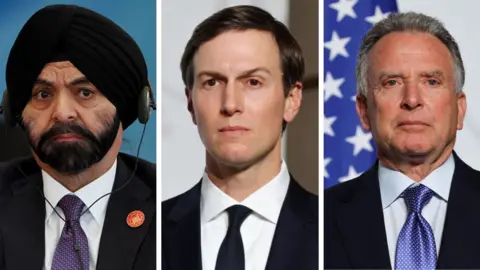
The White House has announced the first members of its Gaza 'Board of Peace', a roster that does little to alleviate concerns that the US president's initiative may impose a colonial solution over the Palestinians. The initial line-up has yet to include any Palestinian representatives, raising questions about the inclusivity and legitimacy of the board's efforts.
Named boards include a 'founding Executive Board', focused on investment and diplomacy, and a 'Gaza Executive Board', overseeing practical operations of a National Committee for the Administration of Gaza (NCAG). Leadership of the NCAG involves technocrats like Dr. Ali Shaath, further complicating the peace strategy.
Among the seven members of the founding board, six are American. The group includes key Trump allies such as Jared Kushner, with notable exceptions like World Bank president Ajay Banga and former UK Prime Minister Tony Blair, who has faced significant criticism due to his controversial past in the Middle East.
Despite the involvement of prominent figures, criticism remains prevalent. Palestinian officials and rights advocates have expressed doubt over Blair's suitability, pointing to his role in the Iraq War and Britain's colonial history as disqualifying factors.
The Gaza Executive Board does contain representatives from Turkey, Qatar, and the UAE, alongside some political figures. This board will be led by Nickolay Mladenov, recently appointed High Representative for Gaza.
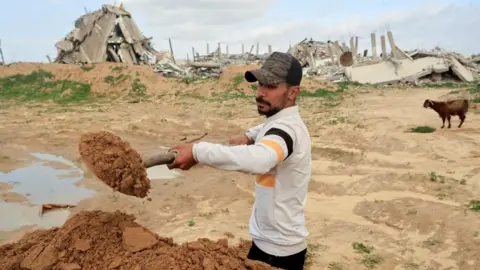
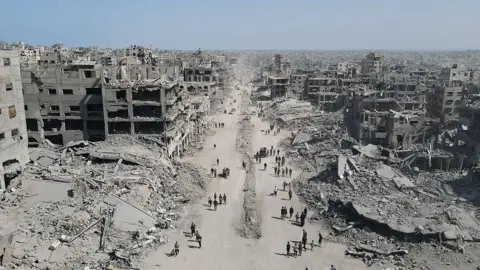
The plan faces daunting challenges, including the reconstruction of vast areas of Gaza severely damaged in recent conflicts. The UN estimates that around 80% of buildings there have been destroyed or damaged, with residents struggling with inadequate shelter and food supplies amid winter conditions.
While some progress has been made in delivering aid, organizations accuse Israel of ongoing restrictions that hamstring relief efforts. An essential step involves removing debris while ensuring safety from unexploded ordnance remains a complex endeavor.
Maintaining a ceasefire presents the ultimate test. The White House has appointed Major General Jasper Jeffers as commander of the International Stabilization Force (ISF), tasked with ensuring the demilitarization of Gaza, though specifics regarding troop contributions and operational frameworks are still unclear.
Ultimately, bridging the divide between conflicting parties and establishing a peaceful, stable environment in Gaza hinges on how quickly the new administration can effect real change for the population, and whether it can address the tribal, political, and humanitarian concerns pressing for resolution.