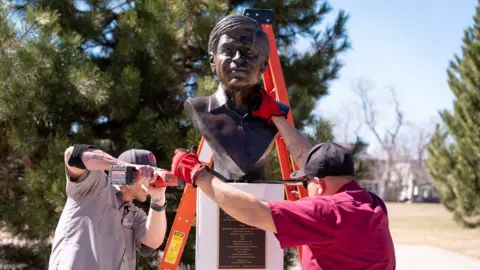
Farm work is personal for many people in the state of California, where nearly three-quarters of America's fruits and nuts are grown. That's why, when sexual abuse allegations against famed farmworker union activist Cesar Chavez came to light in March, it sent shockwaves throughout the state.
As the daughter and granddaughter of farmworkers, this is deeply personal, state senator Suzette Martinez Valladares said during a meeting to discuss removing Chavez's name from streets, parks and schools - as well as renaming Cesar Chavez Day to Farmworkers Day.
The legacy of farmworkers belongs to families like mine across California - not to any one individual, Valladares said, while she and other lawmakers shared stories of how their families worked in the fields picking crops under the hot sun.
As a prominent labor organizer, Chavez helped lead a major strike against Delano grape growers in the 1960s, which sparked boycotts across the country, in order to gain better wages and conditions for workers. His mantra, si, se puede - which means yes, we can in Spanish - has been adopted by activists and politicians who came after him, and was even used by Barack Obama's presidential campaign during his first run for office.
In 1994, Chavez was posthumously awarded the Presidential Medal of Freedom by President Bill Clinton, and in 2014 President Barack Obama declared March 31 to be Cesar Chavez Day.
However, his legacy today has taken a sharp turn after civil rights leader Dolores Huerta - who helped Chavez co-found the National Farm Workers Association - went public in the New York Times alleging he raped her decades ago. The newspaper's investigation also included testimony from two other women, who were the daughters of farmworkers, who said he molested them when they were underage in the 1970s.
Huerta, 95, said she kept quiet about the sexual assault because she feared it would have hurt the farmworkers movement if she spoke up. In a sign of how deep the wounds are after these claims came to light, California lawmakers barely uttered his name when they voted unanimously last week to rename the state holiday Farmworkers Day.
Statements from local leaders illustrate the wider community's reaction, highlighting a growing sentiment to honor the collective effort of farmworkers rather than centering on individual legacies. Artists, too, are reconsidering their depictions of Chavez, with some opting to transform murals to reflect a broader narrative of the labor movement.
Despite these allegations, some community members maintain that the achievements of labor rights can still be celebrated while addressing the dark complexities of their historical figures. This ongoing debate indicates a significant cultural shift around how communities process historical legacies amid contemporary values.
As the daughter and granddaughter of farmworkers, this is deeply personal, state senator Suzette Martinez Valladares said during a meeting to discuss removing Chavez's name from streets, parks and schools - as well as renaming Cesar Chavez Day to Farmworkers Day.
The legacy of farmworkers belongs to families like mine across California - not to any one individual, Valladares said, while she and other lawmakers shared stories of how their families worked in the fields picking crops under the hot sun.
As a prominent labor organizer, Chavez helped lead a major strike against Delano grape growers in the 1960s, which sparked boycotts across the country, in order to gain better wages and conditions for workers. His mantra, si, se puede - which means yes, we can in Spanish - has been adopted by activists and politicians who came after him, and was even used by Barack Obama's presidential campaign during his first run for office.
In 1994, Chavez was posthumously awarded the Presidential Medal of Freedom by President Bill Clinton, and in 2014 President Barack Obama declared March 31 to be Cesar Chavez Day.
However, his legacy today has taken a sharp turn after civil rights leader Dolores Huerta - who helped Chavez co-found the National Farm Workers Association - went public in the New York Times alleging he raped her decades ago. The newspaper's investigation also included testimony from two other women, who were the daughters of farmworkers, who said he molested them when they were underage in the 1970s.
Huerta, 95, said she kept quiet about the sexual assault because she feared it would have hurt the farmworkers movement if she spoke up. In a sign of how deep the wounds are after these claims came to light, California lawmakers barely uttered his name when they voted unanimously last week to rename the state holiday Farmworkers Day.
Statements from local leaders illustrate the wider community's reaction, highlighting a growing sentiment to honor the collective effort of farmworkers rather than centering on individual legacies. Artists, too, are reconsidering their depictions of Chavez, with some opting to transform murals to reflect a broader narrative of the labor movement.
Despite these allegations, some community members maintain that the achievements of labor rights can still be celebrated while addressing the dark complexities of their historical figures. This ongoing debate indicates a significant cultural shift around how communities process historical legacies amid contemporary values.