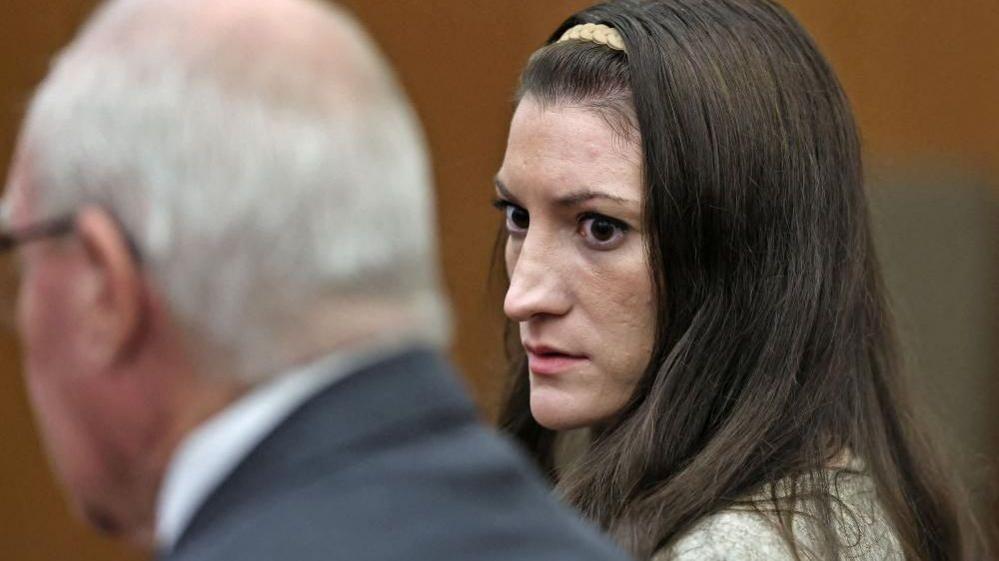
In the hush‑tight, high‑security courtroom of Boston District Court, the emphasis is on a question that can alter a life: is Lindsay Clancy a criminal, or a person in crisis?
The 36‑year‑old former nurse stands accused of deliberately taking her three children’s lives in the basement of their family home back in 2023. While Clancy admits to the killings, her defense alleges that a postpartum psychosis episode—one in which she reportedly heard a voice instructing her to kill—blurred her sense of reality and eroded her judgment.
In Massachusetts, a defendant does not need to prove a mental illness; the burden remains on the prosecution to demonstrate that Clancy could distinguish right from wrong at the time of the act. The court’s recent direction, therefore, focuses on whether the jury considers the psychosis enough to defeat criminal intent.
The Verdict Spectrum
- Not guilty – improbable, would release Clancy without punishment.
- Not guilty by reason of insanity – likely outcome if the jury accepts a severe psychosis.
- First‑degree murder – requires proof of pre‑meditation and intent, leading to life in prison with no parole.
- Second‑degree murder – unlawful killing with malice but no pre‑planning, still a life sentence but with parole eligibility.
- Manslaughter – incidental or negligent killing, maximum 20 years per count.
The prosecution, led by Jennifer Sprague, insists that the fact Clancy was mentally ill did not strip her of criminal responsibility. Sprague highlighted that while Clancy suffered a psychiatric episode, witnesses could not confirm that the alleged voice really commanded the killing. She argued that “the evidence does not preclude Clancy’s knowledge of the wrongness of her acts.”
Defence counsel Elyse Hershon countered that the severity of postpartum psychosis can, in extreme cases, disrupt a person’s sense of reality so fully that they cannot control their actions. Hershon reminded the court that in comparative legal analysis, “a crime committed while under such a condition may not meet the threshold of intent.”
The procedural axe of Massachusetts law cuts neatly: prosecutors must establish, beyond reasonable doubt, that Clancy could discern right from wrong. In turn, the possibility of a mental‑defect mitigation rests not on her proving her illness, but on demonstrating that it did negate criminal intent.
What Comes Next?
If the jury rolls a “not guilty by reason of insanity,” Clancy will be committed to a psychiatric facility, with treatment rather than incarceration. A “not guilty” verdict would be a legal rarity in a high‑profile murder case. An affirmative murder conviction would send the accused into a life sentence—parole‑eligible in the second‑degree scenario but not for first‑degree murder.
Clancy’s case encapsulates the intersection between mental health and the criminal justice system—a debate the court will decide tomorrow. The result will echo beyond the courtroom, informing future prosecutions where psychiatric defenses arise. With the nation still watching, the fate of a mother‑hungry‑voice junction hangs in the balance.
---
From the OnPoint newsroom, with fresh analysis and expert commentary ahead of the verdict.