
In brief
The US envoy warned Israel to act decisively on humanitarian issues as military assistance hangs in the balance, highlighting the urgent need for collaboration in delivering vital aid.
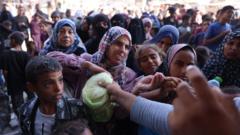
The United States has issued a stern warning to Israel regarding its responsibilities in the escalating humanitarian crisis in Gaza. With a critical deadline nearing, US Ambassador to the UN, Linda Thomas-Greenfield, emphasized the necessity for Israel to improve aid flow to the beleaguered region. The US has set a deadline of November 12 for Israel to significantly increase humanitarian assistance, aiming for a minimum of 350 trucks to enter Gaza daily. However, recent statistics reveal that only a mere 10% of that target has been achieved on average, prompting urgent calls for action.Ambassador Thomas-Greenfield asserted, “Israel’s words must be matched by action on the ground,” expressing concern about the lack of tangible efforts to alleviate the suffering of Palestinians. Despite Israeli claims of fulfilling its humanitarian obligations, Israel's UN envoy, Danny Danon, pointed fingers at Hamas for obstructing aid distribution. This viewpoint has drawn criticism from international observers, especially regarding Israel's controversial ban on the UN agency for Palestinian refugees (Unrwa), which plays a pivotal role in supplying aid in Gaza.During a UN Security Council briefing, the UN's Middle East peace envoy, Tor Wennesland, reported witnessing an exacerbating humanitarian catastrophe during his visit to Gaza, underscoring the dire conditions where essential services, including medical facilities and water sources, have been rendered non-operational since early October due to ongoing military operations.The US has expressed clear dissatisfaction with the current situation, urging immediate action to allow the uninterrupted flow of food, medicine, and other necessities. Ambassador Thomas-Greenfield recalled distressing images from nearly thirty years ago of children suffering from malnutrition, reinforcing the urgency of the situation in Jabalia.Meanwhile, Palestinian officials have raised alarms as the UN reported a drastic decrease in aid distribution compared to previous months. In October alone, only 852 trucks of aid made it through, falling short of the thousands that were previously delivered. The Israeli government, however, places the blame on Hamas, stating that the group misappropriates resources meant for civilians.The American administration has communicated to Prime Minister Benjamin Netanyahu the potential repercussions of continued inadequacies in humanitarian response, which could lead to prohibitive measures on military assistance based on existing US laws that mandate humanitarian aid delivery. As crucial discussions around the role of Unrwa unfold, Thomas-Greenfield stressed the essential services the agency provides and pointed to legislative actions by Israel's Knesset that would further impede humanitarian efforts. Danon, in defense of the legislation, labeled Unrwa as a “terrorist front,” highlighting tensions over their operational legitimacy. In a notable development, UK Foreign Secretary David Lammy indicated that Israel's foreign minister had hinted at potentially delaying the enforcement of new restrictions on Unrwa, creating an unpredictable environment regarding future humanitarian initiatives in the region. However, the Israeli foreign ministry contradicted Lammy’s account shortly after, reaffirming its commitment to implement the Knesset’s decisions.With the humanitarian situation reaching alarming levels, all eyes remain on the escalating conflict as diplomatic channels continue to navigate the delicate complexities enveloping humanitarian aid, military assistance, and international obligations in the Israel-Gaza landscape.
