In brief
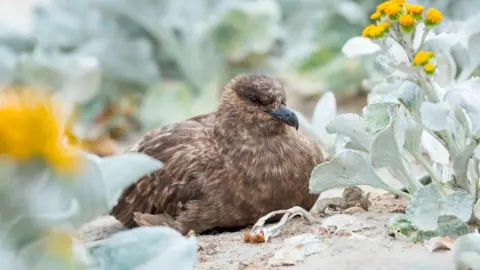
The Australian agriculture ministry has announced the first confirmed case of the H5N1 strain of bird flu, marking the virus’s arrival on the last continent that had been free of the disease. The infected bird was a brown skua discovered on a beach near Esperance in Western Australia. While human infections remain rare, the virus can rapidly spread among poultry and wild birds, raising concerns for the poultry industry. Authorities are monitoring other wildlife and have convened an emergency animal disease committee, recalling last year’s deaths of thousands of seals on the Heard Islands. The incident underscores the far‑reaching impact of migratory birds in spreading H5N1 worldwide.
For the first time, Australian authorities have confirmed a case of H5N1 bird flu, a highly contagious strain that has now reached every inhabited continent. The virus was found in a migratory brown skua that was discovered on a remote beach in the Cape Le Grand National Park near Esperance.
Agriculture Minister Julie Collins said the skua was found about 700 km southeast of Perth. She highlighted that the country was previously the only continent where the H5N1 strain had not been detected.
Although human cases of H5N1 remain uncommon, the virus can spread quickly between poultry and wild bird populations, prompting concerns in the poultry industry and for wildlife health.
In addition to the skua, another suspected case involved a southern petrel found exhausted on an Esperance beach, with no evidence yet of mass mortalities among birds.
Fiona Fraser, the Threatened Species Commissioner, said officials would know within a few days if the virus is present in other animal populations. The Chief Veterinary Officer, Beth Cookson, confirmed that authorities had been preparing for this event for some time and that an emergency animal disease committee convened on Saturday.
The H5N1 strain was previously detected on the remote Australian territories of Heard and McDonald Islands in October last year. A study found that more than 75% of a seal population on Heard Island had died from bird flu, and penguin deaths were higher than expected, likely due to transmission from migratory birds from nearby Crozet Islands.
Bird flu is caused by a virus that infects a wide range of species including birds, foxes, seals and otters. The H5N1 strain first emerged in China in the late 1990s and has since become widespread among wild birds, with rare cases of human infection usually linked to contact with sick animals.