KABUL, Afghanistan (AP) — Afghanistan’s foreign ministry has stated that Afghans who aided the U.S. in its military efforts can return to Afghanistan from Qatar. This announcement comes after reports surfaced of U.S. considerations to relocate 1,100 Afghan refugees, including interpreters and their families, to the Democratic Republic of Congo.
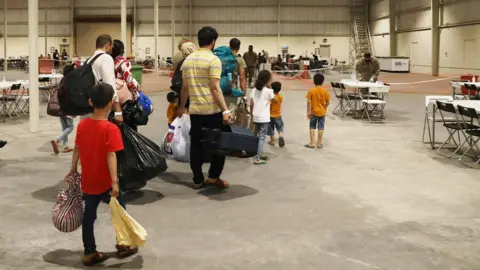
According to #AfghanEvac, a group advocating for Afghan resettlement, U.S. officials have hinted at discussions with Congo regarding relocating those who have been living at Camp As-Sayliyah in Doha for over a year.
While discussions continue, the U.S. State Department is reportedly exploring options for voluntary resettlement in a third country, but has not confirmed specifics.
An alternative offered to the refugees is to return to Afghanistan, a prospect met with fear, as many anticipate retribution from the Taliban for their collaboration with U.S. forces during the 20-year war following the chaotic withdrawal in 2021.
Afghanistan's foreign ministry issued a statement encouraging those interested in returning to do so with confidence, emphasizing that the country welcomes all Afghans. However, many refugees are struggling with the mental toll of uncertainty and fear of violence should they return. In a statement released by those in Camp As-Sayliyah, they expressed deep concern over the implications of relocating to Congo, a nation also plagued by conflict.
The group expressed their unwillingness to move to Congo, stating, 'We do not want to go to the Democratic Republic of Congo. We have been in enough war. We cannot take our children into another one.' They noted that the Taliban's retaliation against them for their U.S. association is seen as a fact, rather than fear.
The ongoing discussions for their relocation have emerged nearly two years after former President Trump paused resettlement efforts for Afghans, leaving many in dire situations worldwide including those in Qatar.
According to #AfghanEvac, a group advocating for Afghan resettlement, U.S. officials have hinted at discussions with Congo regarding relocating those who have been living at Camp As-Sayliyah in Doha for over a year.
While discussions continue, the U.S. State Department is reportedly exploring options for voluntary resettlement in a third country, but has not confirmed specifics.
An alternative offered to the refugees is to return to Afghanistan, a prospect met with fear, as many anticipate retribution from the Taliban for their collaboration with U.S. forces during the 20-year war following the chaotic withdrawal in 2021.
Afghanistan's foreign ministry issued a statement encouraging those interested in returning to do so with confidence, emphasizing that the country welcomes all Afghans. However, many refugees are struggling with the mental toll of uncertainty and fear of violence should they return. In a statement released by those in Camp As-Sayliyah, they expressed deep concern over the implications of relocating to Congo, a nation also plagued by conflict.
The group expressed their unwillingness to move to Congo, stating, 'We do not want to go to the Democratic Republic of Congo. We have been in enough war. We cannot take our children into another one.' They noted that the Taliban's retaliation against them for their U.S. association is seen as a fact, rather than fear.
The ongoing discussions for their relocation have emerged nearly two years after former President Trump paused resettlement efforts for Afghans, leaving many in dire situations worldwide including those in Qatar.