In brief
Decades after the establishment of Abuja as Nigeria's capital, residents displaced during its construction still face unfulfilled promises of compensation and housing. Indigenous communities, who once thrived on the land now covered with government buildings, express a strong desire for representation and recognition in their historic homeland. This article explores the personal stories of affected individuals and the broader implications of political exclusion in the Federal Capital Territory.
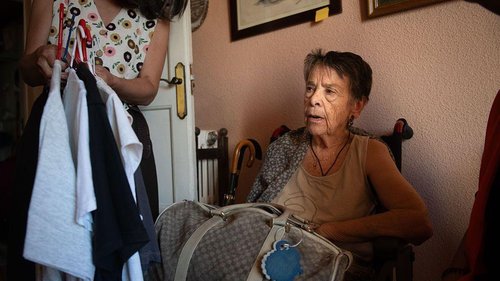
Now in her 80s, Lami Ezekiel remembers construction crews arriving in her ancestral home in Maitama, as it was destroyed to build Nigeria's capital, Abuja.
We just saw big trucks and construction vehicles destroying our farms, she recalls. This was in the late 1980s. She, like others who lived on the land on which the city was built, say they are still waiting for the compensation they were promised at the time.
The planning for the new capital right in the centre of the country began a decade earlier. On 4 February 1976, the military government led by Murtala Muhammed created an area called the Federal Capital Territory (FCT) - 7,315 sq km (2,824 sq miles) of land carved from Niger, Plateau and Kaduna states.
Born in 1982 in Kabusa, which lies within the FCT, Isaac David remembers a childhood of streams and farmland where families drank water from springs and cultivated land that had sustained them for generations. Today, where streams once flowed, stands a luxury hotel - the Transcorp Hilton Abuja.
Land once planted with crops now holds buildings such as the United Nations headquarters and the embassy of the United States. Nigeria's seat of power, the Aso Rock presidential villa, rests on what was once a community shrine.
Those of us who want to farm now have to go and buy farmland on the outskirts of town, says David, who now owns farms in neighbouring Niger state.
Lagos, the former capital, was seen as vulnerable because of its coastal location and politically sensitive because it lay in the heart of Yoruba land in a country managing ethnic rivalries. Abuja was presented as neutral territory - officially described as no man's land. But for at least 10 indigenous groups, including the Gbagyi, whose homes and farms were replaced by ministries and mansions, that description still stings.
Daniel Aliyu Kwali, president of the FCT Stakeholders' Assembly, noted that some anthropologists and historians say that communities have lived there for over 6,000 years. The FCT is just 50 years old; I am 70 years old. We are much older than the FCT, he stated.
The government initially planned to relocate the few local inhabitants outside the territory, but reversed the policy due to the high cost of resettlement. Instead, it allowed those who wished to remain in the FCT to do so. This adjustment enabled some residents to stay, while those in central districts were relocated.
For many families, the process was traumatic and John Ngbako, then secretary of the community in Maitama, remembers his confusion. He said he asked the authorities what is wrong with us? that they couldn't live with the newcomers. Community leaders say they were promised farmland, housing, and access to electricity and water in Kubwa, the relocation site, but before negotiations were complete, security forces arrived.
Families were loaded onto trucks and driven about 30 minutes away to Kubwa, an area where residents say basic amenities were missing and tensions emerged with the original inhabitants. Laraba Adamu, who was newly married at the time, remembers hostility at the river where she fetched water, with people saying: The government cows have arrived.\
Ezekiel, sitting outside her two-room house where she has to cook outside, states, When we were moved, they promised us all the social amenities. None of them have been fulfilled. The water we drink, we buy. The electricity we use, we buy. And we have no farmland. The community calls itself Maitama-Kubwa, preserving the name of the neighbourhood they were forced to leave behind.
The chief of Maitama-Kubwa, Esu Bulus Yerima Pada, expressed his dissatisfaction, stating letters confirming their legal ownership of their new land were never delivered. Up to today, they have not done it, he says.
In central Abuja, wide boulevards and high-rise apartments indicate heavy state investment. Yet, in many indigenous settlements on the outskirts, roads are potholed, classrooms overcrowded, clinics understaffed, and residents lack secure land titles. Residents feel the absence of representation, which has led to anger among communities where traditional rulers claim their people remain neglected.
Despite frustrations, leaders like David stress the importance of non-violent activism. We can demand for our rights, he insists. We want representation. We want to have a voice in our own land. Ezekiel adds, If I could be given land to farm today, land where I and my children can work, I would be truly grateful. The call for justice and inclusion echoes through the shadows of a capital built on their ancestors' land.