Warning: This piece refers to scenes of violence from the start
In a dramatic twist as Hungary approaches its pivotal elections, a disturbing AI-generated video depicting a Hungarian soldier's execution has gone viral, startling viewers nationwide. Released on social media accounts associated with Prime Minister Viktor Orbán's Fidesz party, this video is not merely a shocking spectacle but a significant political maneuver ahead of the elections scheduled for Sunday, April 12.
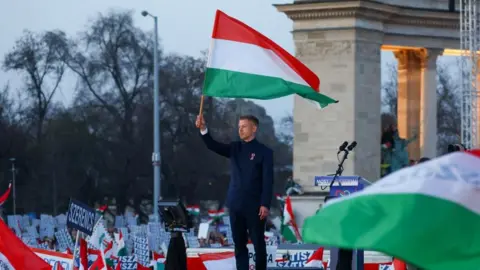
The video narrates the heart-wrenching story of a young girl gazing out a window for her father's return from war, only to cut to a scene of the father — blindfolded and bound — facing his captors and ultimately being shot. This piece of propaganda is aimed squarely at Orbán's political rival, Péter Magyar, who represents the Tisza party and has a substantial potential to unseat the long-reigning Prime Minister after 16 years in power.
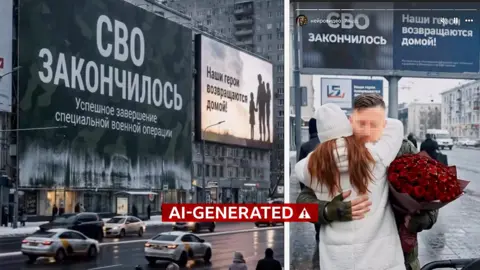
Fidesz has been accused of disseminating unfounded claims regarding the war in Ukraine and Magyar’s stance, employing AI videos to exaggerate the threats posed if Magyar ascends to power. Despite the video's clear substitution of fact with fantasy (labeled as 'AI video'), the implications of its messaging are real and troubling.
Notably, the video warns that if Magyar garners electoral support, he would usher in a new era of volatility that could escalate Hungary's involvement in Ukraine's war. The video is an AI video, but the war is really horrible, it declares. Péter Magyar doesn't want you to see this video. He doesn't want you to glimpse the irreversible tragedy that comes with joining a war.
Amidst this tumultuous backdrop, Magyar's party has firmly rejected these claims, assuring the public that they do not intend to send troops to Ukraine or reintroduce conscription – pledges intended to quell fears stoked by the Fidesz narrative. Further stirring the already churning atmosphere, accusations between the two camps continue to fly, with Magyar characterizing the AI video as heartless manipulation while expert commentators suggest it is indicative of broader disinformation tactics in the campaign.
The discourse surrounding this election reaches new heights of absurdity, with social media echoing sentiments that seem developed in a “state of hallucination,” as described by Éva Bognár at the Central European University's Democracy Institute. As the race draws nearer, such AI-generated portrayals underscore a daunting reality concerning technology's role in shaping political narratives.
Public sentiment may be turning against Fidesz despite its aggressive tactics. According to recent polling, Magyar has pulled ahead in many surveys, significantly aided by his adept use of social media and relatability in outreach, particularly among younger voters. As the day of reckoning looms on the horizon, analysts and observers remain alert to the unfolding drama in Hungary's election landscape, raising fundamental questions about the ethics of misinformation and the future of political media strategies.