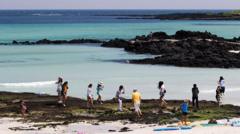
Police in Jeju, South Korea, have officially published guidelines addressing the behavior of foreign tourists, marking a significant step in managing the increasing influx of visitors to the popular holiday destination. This initiative comes after a rise in complaints from local residents regarding tourists' misconduct, such as littering and allowing children to defecate in public spaces.
The guide is the first of its kind in the country and has been translated into Chinese, English, and Korean, ensuring it reaches a wide audience during the peak summer season. With its breathtaking beaches, scenic walking trails, and stunning volcanic vistas, Jeju Island has become increasingly popular among visitors, especially from China, which accounted for nearly 70% of tourists.
According to Kim Su-young, the chief of the Jeju Police Agency, the new guide aims to mitigate misunderstandings that may arise from language barriers and cultural differences, while also enhancing the understanding of Korean customs and regulations among foreign visitors. An initial batch of 8,000 copies will be immediately printed and distributed throughout the island.
The guidelines highlight a range of “minor offenses” that tourists can commit, which may result in financial penalties. These unauthorized actions include smoking in restricted areas, littering, jaywalking, behaving drunkenly in public, leaving restaurants without payment, and public urination or defecation. Although first-time offenders will receive a warning, repeat violations could carry fines of up to 200,000 won (approximately $143 or £106).
As South Korea experiences a significant rebound in tourism post-pandemic, with Jeju welcoming around seven million visitors this year alone, the island's focus on responsible tourism underscores a broader trend across Asia, where popular destinations are increasingly taking measures to combat the challenges posed by over-tourism. Last year, a Japanese town even obstructed a renowned view of Mount Fuji to deter tourists from disrupting the local area.