In brief
Abida Sultaan, the last nawab's daughter of Bhopal, shattered stereotypes and fought against societal confines, leaving a lasting impact in India and Pakistan.
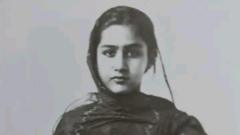
Abida Sultaan was far from an ordinary princess. Born in 1913 as the eldest daughter of Hamidullah Khan, the last Nawab of Bhopal, she revolutionized the image of women in her community. Abida donned short hair, became a skilled marksman, and drove a Rolls-Royce solo at just nine years old. Continuing a legacy established by her powerful ancestors, Abida stood as a beacon of defiance in the face of traditional gender constraints, refusing to observe the purdah and becoming heir to the throne at the age of 15.Her childhood was characterized by an upbringing that was both dynamic and disciplined. Under the watchful eye of her grandmother Sultan Jehan, Abida was groomed to become a ruler. During her formative years, she would rise at dawn to read the Quran, engage in various sports, and embrace a relatively egalitarian lifestyle that allowed her the same freedoms as her male counterparts. Reflecting on her upbringing, Abida stated in an interview, “We girls were not allowed to feel any inferiority on account of our sex.”Despite this progressive legacy, Abida's life was not without challenges. At the age of 12, she was unexpectedly married to Sarwar Ali Khan, a childhood friend, an experience she recounted in humorous detail in her autobiography, “Memoirs of a Rebel Princess.” However, the marriage was fraught with difficulties, leaving her feeling unprepared for the realities of conjugal life, which ultimately led to its breakdown.Following the split, Abida returned to Bhopal with her son, Shahryar Mohammad Khan, and faced a tumultuous custody battle. In a dramatic twist, she boldly confronted her estranged husband at his home, revolver in hand, demanding an end to their dispute. Her victory in this confrontation marked a significant turning point, allowing her to raise her son independently while also managing her royal responsibilities.In the wake of India's partition in 1947 and the subsequent rise in communal tensions, Abida witnessed the horrors of violence firsthand. Distressing memories of the dead bodies of Muslim refugees arriving in Bhopal propelled her to emigrate to Pakistan in 1950, where she later became a prominent advocate for democracy and women's rights. Abida’s remarkable story of resilience came to an end in Karachi in 2002. Though she was eclipsed by family politics back in India, her contributions are fondly remembered by many who refer to her as ‘bia huzoor’. Journalist Shams Ur Rehman Alavi emphasizes the importance of Abida’s legacy, asserting that despite the passage of time and evolving sociopolitical dynamics, her name remains a significant part of Bhopal’s history.