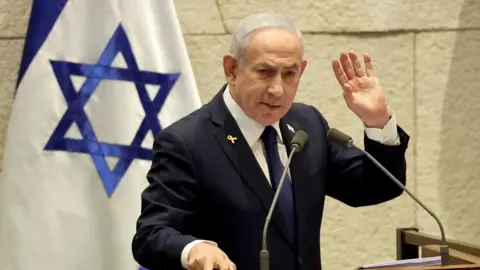
In a striking escalation of diplomatic tensions, Israeli Prime Minister Benjamin Netanyahu has accused Australian Prime Minister Anthony Albanese of "betraying Israel" and abandoning the Jewish community in Australia. This criticism follows the cancellation of a visa for far-right Israeli politician Simcha Rothman, intended for a visit to Australia. Netanyahu asserted on Tuesday that history would remember Albanese as a "weak politician" due to these developments.
Relations have frayed after Australia's decision to bar Rothman from entering the country to attend events organized by the Australian Jewish Association. The Australian government's move was met with fierce condemnation from Israel, leading to reciprocal actions, including Israel revoking the visas of Australian representatives to the Palestinian Authority. This comes after Australia's recent announcement to officially recognize a Palestinian state by September.
Netanyahu's remarks have drawn criticism even from his own political opposition. Yair Lapid, Israel's opposition leader, viewed Netanyahu's incendiary comments as a "gift" to Albanese. He suggested that facing off against Netanyahu was politically beneficial for leaders in democratic nations, hinting that the situation could inadvertently strengthen Albanese's position.
Australia's Home Affairs Minister Tony Burke responded to the situation, emphasizing the need for a "hard line" against individuals spreading messages of hatred and division. He remarked that the government would not welcome those promoting such ideologies into the country. In retaliation to the escalated tensions, Israel's Foreign Affairs Minister Gideon Sa'ar announced plans to scrutinize all official Australian visa requests, citing rising antisemitism in Australia as a key concern.
The context of these exchanges stems from the ongoing Israel-Hamas conflict and Australia's recent decision to recognize a Palestinian state, which Albanese defended by criticizing Netanyahu for his approach, particularly regarding humanitarian impacts on innocent civilians.
As the situation develops, both countries' leaders must navigate the choppy waters of domestic and international expectations while dealing with rising tensions and shifting public sentiments. The diplomatic exchanges underline the delicate balance that must be struck in addressing contentious global issues, especially in times of crisis.
Relations have frayed after Australia's decision to bar Rothman from entering the country to attend events organized by the Australian Jewish Association. The Australian government's move was met with fierce condemnation from Israel, leading to reciprocal actions, including Israel revoking the visas of Australian representatives to the Palestinian Authority. This comes after Australia's recent announcement to officially recognize a Palestinian state by September.
Netanyahu's remarks have drawn criticism even from his own political opposition. Yair Lapid, Israel's opposition leader, viewed Netanyahu's incendiary comments as a "gift" to Albanese. He suggested that facing off against Netanyahu was politically beneficial for leaders in democratic nations, hinting that the situation could inadvertently strengthen Albanese's position.
Australia's Home Affairs Minister Tony Burke responded to the situation, emphasizing the need for a "hard line" against individuals spreading messages of hatred and division. He remarked that the government would not welcome those promoting such ideologies into the country. In retaliation to the escalated tensions, Israel's Foreign Affairs Minister Gideon Sa'ar announced plans to scrutinize all official Australian visa requests, citing rising antisemitism in Australia as a key concern.
The context of these exchanges stems from the ongoing Israel-Hamas conflict and Australia's recent decision to recognize a Palestinian state, which Albanese defended by criticizing Netanyahu for his approach, particularly regarding humanitarian impacts on innocent civilians.
As the situation develops, both countries' leaders must navigate the choppy waters of domestic and international expectations while dealing with rising tensions and shifting public sentiments. The diplomatic exchanges underline the delicate balance that must be struck in addressing contentious global issues, especially in times of crisis.