In brief
Recent studies reveal troubling shifts in the Panama Canal's ecosystem, as invasive fish species threaten local freshwater populations.
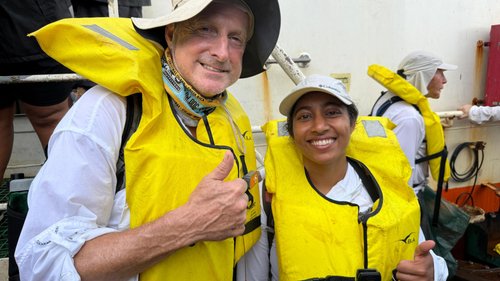
As night descended, scientists from the Smithsonian Tropical Research Institute prepared their lengthy nets on a boat gliding across Lake Gatún in Panama. The jungle around them resonated with the sounds of nature, from the rustling of insects to the calls of distant monkeys. Meanwhile, the silhouettes of immense cargo ships could be seen navigating the waters.For over a century, the Panama Canal has served as a critical link in global trade, forging connections between distant economies. However, this engineered waterway is now playing a pivotal role in linking the Atlantic and Pacific Ocean's distinct ecosystems—a connection that has largely gone unnoticed until recently.For about three million years, the two oceans have been separated by the rising isthmus of Panama. While the canal historically allowed only a limited number of marine species to migrate through it, the multibillion-dollar expansion in 2016 that accommodated larger vessels has dramatically transformed this scenario. Researchers from the Smithsonian Tropical Research Institute observed that various fish species, including jacks, snappers, and snooks, have been crowding out the native freshwater species, mainly tilapia and peacock bass, within just a few years.Fishermen around Lake Gatún have reported dwindling catches, raising alarms about the ecological repercussions of this disruption. Moreover, experts express concern that more fish could traverse between the oceans through the canal, raising the threat of invasive species, particularly the notorious lionfish. This venomous predator, which has wreaked havoc on Caribbean and Gulf of Mexico ecosystems, has yet to establish a presence on Panama's Pacific coast.Should lionfish find their way through the canal, the consequences could be severe for the already vulnerable local fish populations. Researchers and environmentalists are now grappling with the intricate balance between accommodating global trade and preserving biodiversity, as the Panama Canal stands as a pivotal crossroads of both.