In brief
The innovative satellite aims to offer insights on the feasibility of using timber as a renewable resource in extraterrestrial construction.
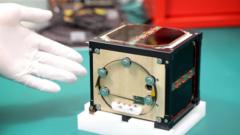
The world's first wood-panelled satellite, LignoSat, has been successfully launched into space, marking a significant milestone in exploring sustainable building materials for future extraterrestrial missions. Developed by Kyoto University researchers in Japan, this solar-powered satellite weighs just 900 grams and will be sent to the International Space Station (ISS) aboard a SpaceX rocket, before being released into Earth orbit.LignoSat's panels are uniquely constructed from a type of magnolia wood using traditional techniques that eliminate the need for screws or adhesives. Researchers theorize that if sustainable timber can be utilized in space, it might ultimately replace some metals currently used in spacecraft, particularly as humanity looks toward potential colonization of the Moon and Mars. "Wood is more durable in space than on Earth because there's no water or oxygen that would rot or inflame it," stated Koji Murata, a forest science professor at Kyoto University, in comments to Reuters.Murata further emphasized the practicality of such a satellite, drawing comparisons to early 20th-century airplanes that were also constructed from wood. The researchers hope that if trees could one day be cultivated on other celestial bodies, timber could serve as a vital resource for shelters and habitats in space.While LignoSat is primarily made from wood, it incorporates conventional aluminum structures and electronic components, with onboard sensors tasked with monitoring the wood’s resilience against the harsh space environment during its six-month orbit. Simeon Barber, a space research scientist at the Open University in the UK, noted the satellite is not entirely wood-based but acknowledged the intriguing concept behind using renewable materials. "From a sustainability point of view, wood is a material that can be grown and is therefore renewable," he remarked. Historically, wood has found relevance in spacecraft; cork has been used to insulate re-entry vehicles, with Soviet lunar landers employing it for better grip during descent. Barber explained, "There's nothing wrong with using wood in space - it's using the right material for the right task." Nonetheless, Barber warned that wood presents engineering challenges due to its unpredictable properties and potential weight implications when applied in spacecraft construction. The Kyoto University researchers are hopeful that using wood in spacecraft could significantly reduce pollution compared to metal counterparts, which leave toxic residues upon burning up during re-entry.As the conversation surrounding space junk and pollution intensifies, experts recognize the urgency for innovative solutions in the growing cosmos. While wood may contribute to reducing metallic contaminants, concerns linger about the necessity of carrying additional material into space solely for disposal purposes. The trajectory of LignoSat could mark the onset of a new chapter in sustainable space exploration, sparking continued dialogue around the role of renewable resources in the uncharted realms beyond Earth.