
In brief
For over a decade, the Léon Thévenin has been navigating the African seas to repair critical undersea internet cables, preventing major connectivity blackouts. The dedicated crew, who often sacrifice personal time for their mission, play an essential role in keeping millions connected online amidst the challenges of cable damage caused by human activity or natural disasters.
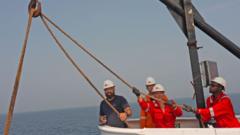
The Léon Thévenin, a vessel as long as a football field, is an unsung hero in maintaining Africa's digital connections. For 13 years, this ship, manned by over 50 specialized engineers and technicians, has traversed the African seas to repair the numerous internet cables that connect the continent to the world. Its critical role came to light during last year's devastating internet outages, which saw millions unable to access essential services due to damaged undersea cables.According to Shuru Arendse, a cable jointer who has been with the Léon Thévenin for over a decade, "Because of me, countries stay connected." His sentiment encapsulates the pride felt by the crew, whose tedious work often goes unnoticed by the millions they serve.Africa’s internet is primarily dependent on around 600 undersea fiber optic cables that connect various countries to global data centers. These cables, built to last approximately 25 years, require minimal maintenance. However, human activities, such as fishing and improper anchoring, often cause significant damage, leading to widespread connectivity issues. Charles Heald, the ship’s ROV operator, noted that while natural events might contribute to cable breaks, most issues arise from human error.Recent incidents have highlighted the fragility of these connections. Last year, three essential cables in the Red Sea were damaged, cutting off internet access for millions in East Africa. Further, disruptions in March and May of 2024 similarly highlighted the continent's vulnerability, with many countries entirely at a loss until repairs were made.Repair operations on this scale involve meticulous and technical processes. The ship’s crew uses advanced testing methods to identify where cables are damaged, often needing to dive as deep as 5,000 meters below sea level. Upon locating a fault, the remotely operated vehicle (ROV) is deployed, acting like a robotic bulldozer to carefully find and isolate the damage. One significant repair task covered by the BBC took a week to complete but went unnoticed by most internet users, thanks to rerouted traffic.This vital work starts the moment a cable fault is reported, with the crew prepared to set sail within 24 hours. However, factors such as ship location, spare parts, and bureaucratic red tape can delay their response. Crew members face personal sacrifices as they often spend more than six months at sea, leaving behind family and loved ones. Engineer Noel Goeieman reflected on the emotional toll, stating, “I may miss my son’s wedding if duty calls.”Beyond their technical prowess, the crew's camaraderie shines through during their off-duty hours, providing a supportive environment amid challenging work schedules. With diverse backgrounds, including former gang members and skilled technicians, each crew member embodies a unique story and motivation, united by their mission to sustain Africa's connectivity.As Captain Thomas Quehec aptly put it, “We are the link between Africa and the world." The investigative nature of the Léon Thévenin underscores the necessity of its mission, showcasing how vital these sea-faring operations are to everyday digital life across the African continent.

