
In brief
In a groundbreaking achievement for its space program, the Indian Space Research Organisation (ISRO) has successfully performed a space docking test as part of the SpaDeX mission, marking India as the fourth country worldwide to demonstrate this technology.
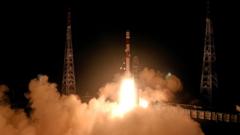
The SpaDeX mission launched from Sriharikota on December 30, carrying two small spacecraft known as the Chaser (SDX01) and the Target (SDX02), each weighing approximately 220 kg (485 lbs). Initially slated for docking on January 7, the operation faced delays but ultimately succeeded after scientists adeptly maneuvered the spacecraft to close the distance between them.Prime Minister Narendra Modi, present at ISRO headquarters in Bangalore during the docking, later emphasized that this feat represents a significant step forward for India’s ambitious future space endeavors. Federal Science Minister Jitendra Singh conveyed his relief over the successful docking process, which involved intricate operations to achieve precise alignment of the two crafts.The docking procedure was intricate, requiring an exact match in velocity and trajectory to establish a connection. Mila Mitra, a former NASA scientist, explained the process, stating that while the two spacecraft were initially separated at a distance of 10-20 km, they were gradually brought to just 3 meters apart before successfully latching together.This test comes at a crucial time as India aims to develop its own space station and potentially send astronauts to the Moon. Following the docking, ISRO plans to conduct significant experiments, including the transfer of electrical power between the spacecraft and testing inter-satellite communication to enhance coordination in future missions.In addition to these experiments, the SpaDeX mission is demonstrating the viability of crop cultivation in microgravity. One of its payloads has already successfully germinated cowpea seeds in space, providing a glimpse into sustainable food production for long-duration missions.The spacecraft also carry scientific instruments and cameras for monitoring radiation in space and observing Earth’s natural resources. Moreover, ISRO is repurposing parts of the rocket that typically would contribute to space debris for further experiments in orbit, showcasing responsible management of space resources.As international competition in space exploration heats up, the success of the SpaDeX mission not only reinforces India's capabilities but also serves as a crucial platform for future space missions, including the upcoming Chandrayaan-4 lunar mission, which aims to gather and return lunar soil samples.With these advancements, India is solidifying its position as a formidable player in the global space arena, striving towards innovation and exploration in the vast expanse above.
