Two days after a magnitude 6.9 earthquake struck her hometown in the central Philippines, Arguel Estalicas says she still feels dizzy every time she stands up. That spinning feeling, coupled with a string of aftershocks, has left the 35-year-old tourism officer and many other survivors too scared to return to their homes, forcing them to live in tents temporarily. The earthquake shook the northern coast of Cebu, one of the country's most populous islands, on the night of 30 September, jolting many out of their sleep. It killed at least 68 people and wounded more than 500 others, as homes, buildings, and churches collapsed and roads cracked. I still couldn't process what has happened to us, Ms. Estalicas tells the BBC. I am overwhelmed with the things we experienced in the last two days. The 35-year-old lives in Medellin town, near the quake's epicenter. Disaster response officials say the earthquake displaced nearly 80,000 people across Cebu and nearby provinces. Cebu is a major trading and transportation hub in the central Philippines. She said she got out of bed screaming when the earthquake struck and ran outdoors with her family. They slept under the open sky, but when a light drizzle fell, Ms. Estalicas and her family wrapped themselves up in plastic bags because they did not have raincoats. Photos on social media showed them slouched on plastic chairs, swathed in plastic bags fogged up by their breath.
About 10km (6.2 miles) away, in San Remigio municipality, Lourenze Pareja also spent the night outdoors on the night of the earthquake. There, under the night sky, we sat freely - in great faith - with our little lights, holding on to what resources we had, Mr. Pareja wrote on Facebook. Pray for us, everyone. When the ground started shaking, Mr. Pareja said he grabbed his phone and ran to the street to livestream the unfolding chaos - neighbors in pajamas leaving their homes, with their children and pets in tow. Lord, the 25-year-old community journalist said in the livestream, calling out to God, seemingly unable to say much else. He said he checked neighboring Bogo town and saw solar lamps casting a dim glow over streets strewn with boulders. What was once a vibrant city has turned into a ghost town, he said.
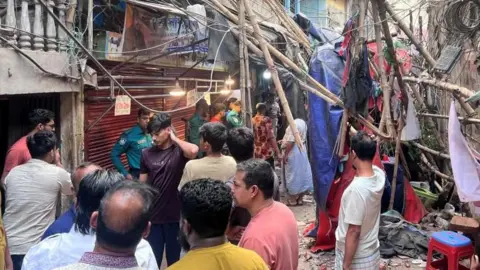
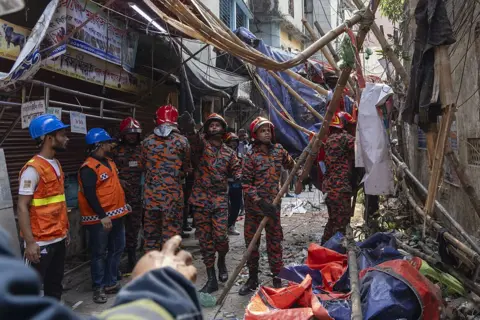
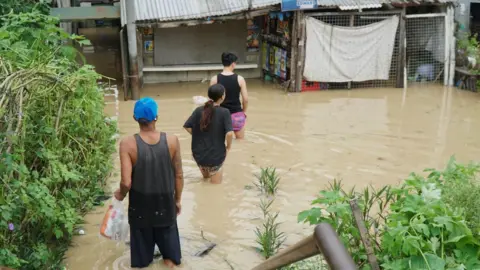
The Philippines is vulnerable to natural disasters, located on the geologically unstable Ring of Fire. The Cebu earthquake on Tuesday is among the strongest and deadliest in recent years. On Thursday, rescuers searched through rubble as authorities worked to deliver food, restore power and communication lines, and clear roads of debris. However, daily necessities remain a pressing concern for many. Photographer Doods Demape decided on Thursday to make a four-hour drive from Medellin to the provincial capital to buy supplies since no supermarkets were open. Although most roads are now passable, essential supplies like water and food, especially for children, are not yet available. This week's earthquake comes in the middle of a fierce typhoon season, causing public anger and street protests over the compounded disasters.
Cebu locals like Ms. Estalicas and Mr. Pareja express hope amid chaos, relying on their community for support. They emphasize the necessity for timely aid from local authorities to alleviate their dire conditions.
About 10km (6.2 miles) away, in San Remigio municipality, Lourenze Pareja also spent the night outdoors on the night of the earthquake. There, under the night sky, we sat freely - in great faith - with our little lights, holding on to what resources we had, Mr. Pareja wrote on Facebook. Pray for us, everyone. When the ground started shaking, Mr. Pareja said he grabbed his phone and ran to the street to livestream the unfolding chaos - neighbors in pajamas leaving their homes, with their children and pets in tow. Lord, the 25-year-old community journalist said in the livestream, calling out to God, seemingly unable to say much else. He said he checked neighboring Bogo town and saw solar lamps casting a dim glow over streets strewn with boulders. What was once a vibrant city has turned into a ghost town, he said.
The Philippines is vulnerable to natural disasters, located on the geologically unstable Ring of Fire. The Cebu earthquake on Tuesday is among the strongest and deadliest in recent years. On Thursday, rescuers searched through rubble as authorities worked to deliver food, restore power and communication lines, and clear roads of debris. However, daily necessities remain a pressing concern for many. Photographer Doods Demape decided on Thursday to make a four-hour drive from Medellin to the provincial capital to buy supplies since no supermarkets were open. Although most roads are now passable, essential supplies like water and food, especially for children, are not yet available. This week's earthquake comes in the middle of a fierce typhoon season, causing public anger and street protests over the compounded disasters.
Cebu locals like Ms. Estalicas and Mr. Pareja express hope amid chaos, relying on their community for support. They emphasize the necessity for timely aid from local authorities to alleviate their dire conditions.