
In brief
Following South Korea's deadliest plane crash, aviation experts are scrutinizing the presence of a concrete wall near the runway at Muan International Airport. The wall may have significantly contributed to the high casualty rate, leading to calls for reevaluation of airport safety standards.
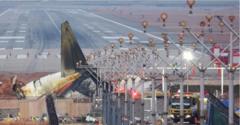
The recent plane crash at Muan International Airport, South Korea, has drawn significant attention to an unusual concrete wall located near the runway, raising questions about its safety implications. The accident, which resulted in the deaths of 179 people, has led investigators to ponder the influence of this concrete structure, situated approximately 250 meters (820 feet) from the runway's conclusion.Capturing footage of the tragic event, it was observed that the Jeju Air flight veered off the runway and collided with the wall before igniting in flames. Air safety expert David Learmount emphasized that had this obstruction not been present, the consequences may have been drastically different, with a higher chance of survivors among the passengers on board. The pilot had previously aborted the landing due to a bird strike, prompting a second attempt from an alternate approach.Despite the aircraft's compromised state upon landing—without utilizing its wheels or landing gear—Learmount noted that the plane managed a relatively straightforward landing. The high casualty rate, however, he argues, was primarily due to the collision with the solid wall beyond the runway's end.Critics of the wall, including Lufthansa pilot Christian Beckert, characterized it as unusual for an airport setting. This wall supports a localizer navigation system, critical for properly guiding aircraft during landings. Though Yonhap News Agency reported that such structures exist at other South Korean airports, officials will investigate whether it would be more prudent to use less rigid materials that would better absorb impact.Chris Kingswood, an experienced pilot, questioned the wall's compliance with safety regulations that often require obstacles near runways to be frangible—designed to break upon impact. He expressed concern regarding the wall's inflexible construction, suggesting it could pose a significant hazard to aircraft.The impact of the incident has prompted discussions about the awareness of the pilots concerning the wall's location during the landing. Investigators will scrutinize whether pilots received updated instructions from control towers when approaching from an atypical direction. As the tragedy unfolds, many unanswered questions remain, stirring a debate about aviation safety standards and airport design protocols across South Korea and internationally.
