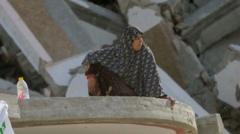
In recent days, thousands of Gazans have begun the difficult journey back home after 15 months of displacement due to the ongoing conflict. Although the geographical distance is short given the Gaza Strip's size, the emotional and logistical hurdles facing these returning residents highlight the arduous task ahead. Gazan journalist Ghada el-Kurd, who has recently returned from sheltering in Deir el-Balah, describes the situation bluntly: "We have to re-establish again from the beginning, from zero."
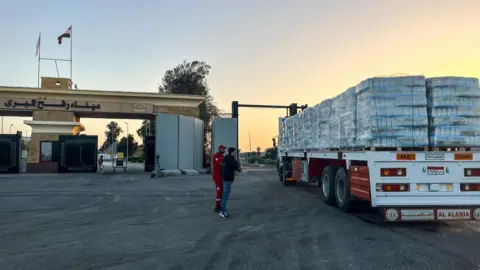
Immediate humanitarian needs such as food and shelter are gradually being addressed. Sam Rose, from the UN's Palestinian refugee agency, Unrwa, noted that aid levels are beginning to rise, indicating that basic necessities like food and hygiene items are reaching those most in need. However, the challenge that lies ahead is immense, with the residents in need of much more than the bare minimums being provided.
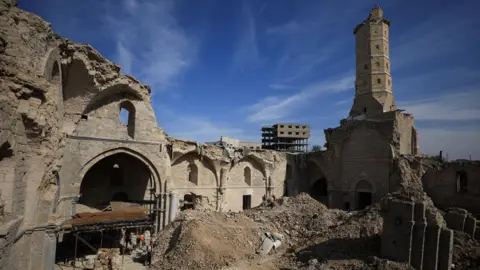
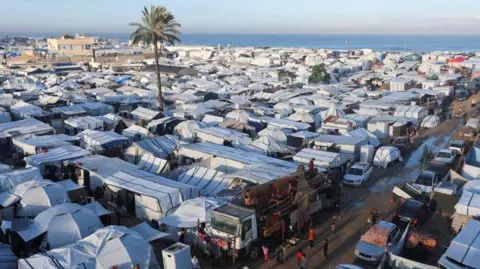
Finding adequate shelter remains a critical obstacle. The UN estimates that approximately 70% of Gaza's buildings have been either damaged or completely destroyed since October 2023, particularly in northern districts like Jabaliya, once home to around 200,000 residents, which is now virtually unrecognizable. In response to this dire situation, Gaza's government is urgently requesting 135,000 tents and caravans, but the UN warns it may struggle to keep up with this unprecedented demand.
As families attempt to return to their homes, many are facing new pressures. Those who remained in the north fear an influx of returnees will exacerbate the already critical accommodation shortage, leading to a rise in tensions as space becomes increasingly cramped. Asma Tayeh, a resident who fled Jabaliya but stayed in the north, shares her concern about the growing number of families living in shared spaces, causing friction amidst the struggle to find comfort in the wreckage of their previous lives.
Economic pressures are also on the rise; with returning residents flooding the markets, prices for staples are beginning to soar, adding to the distress of families already facing limited supplies of water and electricity.
Despite the grim circumstances, some returning Gazans express a sense of optimism about going back home. Many share their relief at leaving behind the hardships endured in southern regions and the hope of reclaiming their dignity in familiar surroundings.
As discussions around solutions to the refugee crisis grow, with proposals for host countries to take in displaced Palestinians, officials from Jordan and Egypt have rebuffed such suggestions, citing fears of destabilization within their borders. However, some in Israel's government see these proposals as a viable option, reflecting a complex and contentious discourse surrounding Palestinian displacement.
As conditions often deteriorate, some Gazans have already chosen to explore opportunities abroad, with many more contemplating leaving should recovery efforts falter. Journalist Ghada el-Kurd cautions that the outlook must be improved to prevent further exodus. "But why not in Gaza?" she asks, emphasizing the need for viable future opportunities within the beleaguered territory itself.
Without an immediate and meaningful reconstruction process, the fear remains that many Gaza residents might decide to leave, leaving behind communities struggling to recover from years of conflict.
Immediate humanitarian needs such as food and shelter are gradually being addressed. Sam Rose, from the UN's Palestinian refugee agency, Unrwa, noted that aid levels are beginning to rise, indicating that basic necessities like food and hygiene items are reaching those most in need. However, the challenge that lies ahead is immense, with the residents in need of much more than the bare minimums being provided.
Finding adequate shelter remains a critical obstacle. The UN estimates that approximately 70% of Gaza's buildings have been either damaged or completely destroyed since October 2023, particularly in northern districts like Jabaliya, once home to around 200,000 residents, which is now virtually unrecognizable. In response to this dire situation, Gaza's government is urgently requesting 135,000 tents and caravans, but the UN warns it may struggle to keep up with this unprecedented demand.
As families attempt to return to their homes, many are facing new pressures. Those who remained in the north fear an influx of returnees will exacerbate the already critical accommodation shortage, leading to a rise in tensions as space becomes increasingly cramped. Asma Tayeh, a resident who fled Jabaliya but stayed in the north, shares her concern about the growing number of families living in shared spaces, causing friction amidst the struggle to find comfort in the wreckage of their previous lives.
Economic pressures are also on the rise; with returning residents flooding the markets, prices for staples are beginning to soar, adding to the distress of families already facing limited supplies of water and electricity.
Despite the grim circumstances, some returning Gazans express a sense of optimism about going back home. Many share their relief at leaving behind the hardships endured in southern regions and the hope of reclaiming their dignity in familiar surroundings.
As discussions around solutions to the refugee crisis grow, with proposals for host countries to take in displaced Palestinians, officials from Jordan and Egypt have rebuffed such suggestions, citing fears of destabilization within their borders. However, some in Israel's government see these proposals as a viable option, reflecting a complex and contentious discourse surrounding Palestinian displacement.
As conditions often deteriorate, some Gazans have already chosen to explore opportunities abroad, with many more contemplating leaving should recovery efforts falter. Journalist Ghada el-Kurd cautions that the outlook must be improved to prevent further exodus. "But why not in Gaza?" she asks, emphasizing the need for viable future opportunities within the beleaguered territory itself.
Without an immediate and meaningful reconstruction process, the fear remains that many Gaza residents might decide to leave, leaving behind communities struggling to recover from years of conflict.