In brief
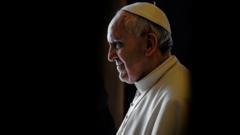
Pope Francis, born Jorge Mario Bergoglio, has reshaped the Catholic Church's voice and purpose since his papacy began in 2013. His simple lifestyle, focus on social justice, and efforts to bridge divides have made waves in the ecclesiastical landscape, while navigating controversies surrounding traditional teachings and allegations of abuse.
Pope Francis, who made history as the first Pope from Latin America and the Southern Hemisphere, was elected in March 2013 amid expectations for significant reform. Representing a shift from European heritage, he emerged as a compromise candidate, balancing conservative and liberal ideologies. This Jesuit Pope has remained a figure of humility, rejecting the ornate traditions often associated with the papacy. He famously declined the papal limousine, opting instead to travel with other cardinals on a bus.Among his myriad accomplishments, Francis called for a “poor Church for the poor,” aiming to embody the compassionate message of Christianity. However, his commitment to social issues faced challenges from traditionalists within the Vatican bureaucracy who preferred his predecessor, Pope Benedict XVI. From a formative upbringing in Buenos Aires, Argentina, where his family fled fascism, Bergoglio stood out as a groundbreaker. His past as a nightclub bouncer and his Jesuit training informed his pastoral approach. Despite controversies regarding his past actions during Argentina's military dictatorship, including accusations of not doing enough to protect vulnerable priests, he has maintained his stance, asserting he worked behind the scenes for justice.As Pope, Francis focused on healing the rift with the Eastern Orthodox Church, mediating peace between Israel and Palestine while grappling with complex theological issues. He offered progressive views on some topics, although he remained traditional on critical matters such as euthanasia, marriage, and contraception, committing to a Catholic doctrine that aligns with historical teachings.Criticism intensified around scandals of child abuse within the Church, which some believed compromised the Church's integrity and Francis’s reforms. A significant moment arrived in 2018 when an ex-Vatican official accused him of negligence regarding sexual misconduct cover-ups, escalating tensions to unprecedented levels.Health concerns emerged in recent years, culminating in a hospitalization for pneumonia. Nonetheless, Francis remained committed to ecumenical dialogue, visiting conflict-ridden regions and advocating for peace in Ukraine.In reflecting on his legacy, Pope Francis has redefined the papacy's global presence. He appointed over 140 cardinals from diverse cultural backgrounds, hoping to rejuvenate a more inclusive Church that serves the needy. By choosing not to live in the Vatican's luxurious Apostolic Palace, he emphasized a mission untainted by vanity.Francis’s papacy ignited hope for a more connected, compassionate Church, aligning closely with his vision: one that embraces the wounded and marginalized rather than isolating itself from the world's suffering. As he once expressed, "If I had to choose between a wounded Church that goes out onto the streets and a sick, withdrawn Church, I would choose the first."