
In brief
As pollution levels in Delhi soar, expert predictions indicate worsening conditions due to weather and festival activities.
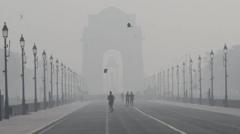
The air quality in Delhi, India's capital, has recently plunged into severe categories, posing significant health risks to its residents. According to measurements from government sources, pollution levels surged to alarming heights last week, exceeding 25 to 30 times the safe limits set by the World Health Organization (WHO).Experts caution that the situation is expected to deteriorate further in the days ahead. Factors contributing to the worsening air quality include unfavorable weather patterns, the release of smoke from firecrackers during the Diwali festival, celebrated this Thursday, and the burning of agricultural waste in adjacent states. This annual phenomenon typically renders northern Indian cities, including Delhi, blanketed in thick smog from October through January, leading to disruptions in daily life, school closures, and business interruptions.Data from the Safar monitoring website indicates that particulate matter levels, specifically PM 2.5—which can penetrate deeply into the lungs—hit unprecedented marks, reaching up to 350 micrograms per cubic meter in certain districts last Monday. The air quality is categorized as very poor when PM 2.5 levels fluctuate between 300-400, while any figure above 400 qualifies as severe.Every winter, Delhi grapples with air quality challenges arising from a combination of agricultural burning, vehicular emissions, including dust and smoke, and stagnant atmospheric conditions. Farmers in nearby Punjab and Haryana traditionally resort to burning crop stubble to clear their fields at this time of year, leading to a surge in air pollution. While agricultural organizations seek financial assistance and creative solutions to alleviate this issue, current government initiatives have yielded minimal results.Moreover, the pollution crisis is exacerbated by firework use during Diwali celebrations. Despite a total prohibition on the manufacture and distribution of fireworks in the lead-up to the festival, historical patterns show that such bans often fall short as residents source fireworks from neighboring regions.In response to the escalating pollution crisis, the Delhi government has enacted its Graded Response Action Plan (GRAP) to mitigate harmful emissions. This plan imposes a ban on coal and firewood usage and restricts diesel generator operation for non-emergency purposes. Authorities are advising residents to remain indoors when possible and have suspended construction activities, also encouraging the use of public transport to reduce emissions from private vehicles.As Delhi grapples with this environmental catastrophe, reports underline the urgent need for both immediate action and long-term solutions to combat air pollution in the region.
