In brief
UNHCR’s latest report deems 90 million forcibly displaced people at increasing climate risk, overlapping conflict and displacement with climate change, and calls for more financing to help vulnerable communities adapt, while noting returnees face renewed risks.
On Friday, the United Nations refugee agency, UNHCR, released a report warning that nearly 90 million forcibly displaced people are now living in countries that are increasingly exposed to climate‑related droughts, floods and extreme heat, a tipping point that UN officials say comes just before the COP31 climate summit in Antalya, Turkey.
The study, published to coincide with the conference, found that about three‑quarters of the world’s displaced count are situated in nations such as Afghanistan and Bangladesh that endure serious climate‑related threats, thereby illuminating a growing overlap between conflict, displacement and climate change.
Anton Leis Garcia
"Climate adaptation in fragile and displacement‑affected areas is a matter of survival," he said. "We need climate financing to reach the communities where the needs are greatest."
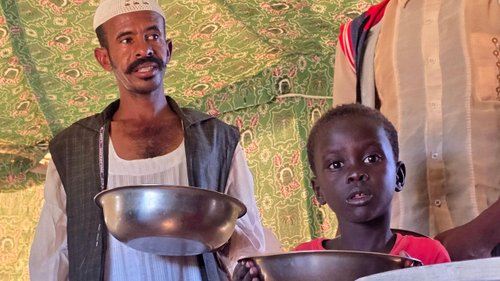
To humanize the numbers, the report follows a Sudanese refugee who fled armed conflict in al‑Fashir in June 2023 and now resides at the Farchana settlement in eastern Chad. She recounts that the seasonal riverbeds that once supplied her community have dried up amid intensifying heat, forcing her to walk for up to a week without access to safe water.
Beyond daily hardships, the agency highlighted that climate change is making it harder for displaced people to return home sustainably. In the first half of 2026, more than two‑thirds of refugee returns were to countries highly exposed to climate hazards, placing them at risk of renewed displacement.
In Syria, where nearly 4 million displaced people have recently returned, the situation has worsened: worsened water scarcity, erratic rainfall and flooding along the Euphrates River in May damaged homes and displaced thousands again, the report said.
Across sub‑Saharan Africa, one in three refugee settlements could experience at least 100 days of dangerous heat each year by 2050, threatening the health and livelihoods of residents. In addition, the agency pointed to settlements in Ethiopia – for example, Helaweyn – where increasing temperatures could further jeopardize safety, though detailed forecasts were not fully specified in the release.
UNHCR’s findings press donors, host governments and the international community to step up. The agency’s high‑level officials underscored the urgent need for climate‑adaptation funding specifically directed at the most vulnerable communities, while reminding that without such investment, displacement could become a cyclical trap for millions who have already endured conflict and catastrophe.
While the report does not provide a concrete solution, it does illuminate open questions that will likely shape COP31 deliberations: How will host countries incorporate climate‑risk mitigation into post‑conflict reconstruction? Will the global community commit to sufficient climate financing to close the gap disclosed by UNHCR? How will new funding mechanisms address the particular needs of returnees who face renewed environmental hazards?
As COP31 approaches, the agency’s warning lays bare the reality that climate threats are no longer a distant or abstract risk—they have become an immediate, daily pulse for millions of people already forced to move from their homes.