
In brief
Ukraine's quest for security guarantees and territorial integrity is at the forefront of international discussions.
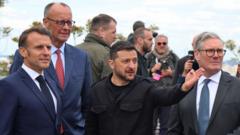
In a pivotal meeting at the White House, world leaders gathered with Ukrainian President Volodymyr Zelensky to deliberate on the future of Ukraine amidst escalating confrontations with Russia. This assembly, which included prominent figures such as French President Emmanuel Macron, German Chancellor Friedrich Merz, and UK Labour leader Sir Keir Starmer, aimed to ensure Ukraine remains an active participant in any peace negotiations that could affect its fate.This high-stakes scenario follows a disappointing US-Russia summit, where hopes for substantial agreements faltered, raising fears that Ukraine's interests could be overlooked. Leaders emphasized unity in their message to President Donald Trump, urging him to understand that any potential peace deal must include solid security assurances for Ukraine, reflecting a collective stance against Russian aggression.The diplomatic efforts hinge largely on Starmer's rapport with Trump, who is known to respect him. Starmer, along with NATO Secretary-General Mark Rutte, seeks to leverage their connections with the US president to reinforce a concrete allyship with Ukraine. Despite differing opinions and tensions evident in EU-US relations, particularly after France's controversial stance on recognizing a Palestinian state, the leaders are focused on presenting a united front.For a peace deal to take root, fundamental compromises may be necessary. Ukraine firmly stands against relinquishing any territorial claims, especially regions like the Donbas, where Russian influence looms large. Yet, broad discussions have emerged around trading land for definitive security promises, a concept fraught with peril given the heavy losses incurred in defending those territories.European leaders have expressed that true victory does not solely rest on recovering land but rather on securing enduring independence from Russian threats, underpinned by strong international guarantees. Nonetheless, the specter of renewed military action looms should the conflict cease, with analysts predicting that Russia would likely bolster its military capabilities in anticipation of future territorial ambitions.As the summit unfolds, the road to lasting peace remains precarious, underscoring the complexities of international diplomacy in a region marked by conflict and strategic uncertainty. The outcome of these negotiations will be crucial in shaping not only Ukraine's immediate future but also the broader security landscape across Europe.
