
In brief
Lavrov called the brief chat with Rubio "not bad", praising Washington’s willingness to maintain dialogue while defending a diesel‑fuel agreement amid congressional criticism. He also condemned US military assistance to Ukraine and urged avoidance of confrontations, while Rubio urged G20 members to focus on economic cooperation ahead of the December summit. The meeting reflects continuing tensions over sanctions, energy deals and the broader conflict.
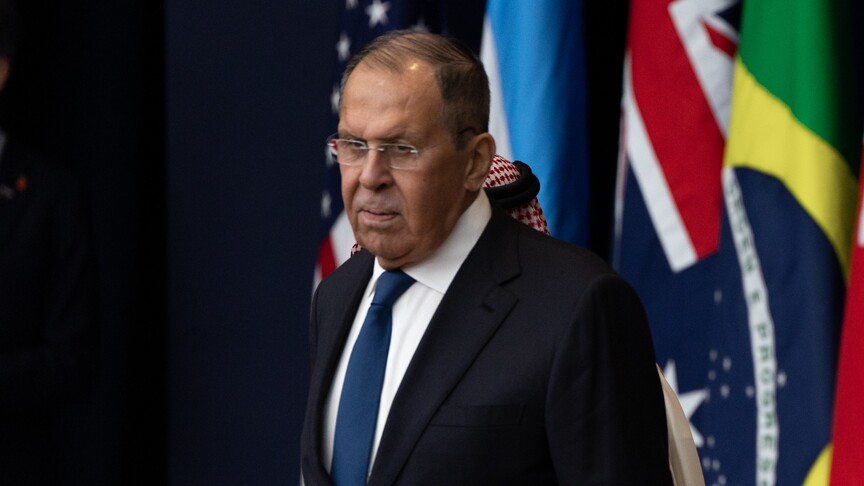
Lavrov said on Friday that he had a brief but constructive meeting with U.S. Secretary of State Marco Rubio on the sidelines of the G20 Foreign Ministers’ Meeting in Atlanta, underscoring that the conversation was 'not bad'. Lavrov added that Washington’s willingness to maintain dialogue at various levels was welcome and that Moscow and Washington should seek mutually beneficial projects while avoiding the risk of confrontational escalation.
During the brief exchange, the two officials discussed ways to strengthen relations through shared participation in multilateral institutions such as the United Nations, the G20 itself and the Asia-Pacific Economic Cooperation (APEC) forum, according to Lavrov’s statement at a news conference.
Lavrov noted that the U.S. had demonstrated a readiness to keep multiple channels open, which he saw as a positive sign for continued diplomacy on issues that affect both countries. He called for Moscow and Washington to pursue projects where their interests overlap and to refrain from letting disagreements slide into direct confrontation.
On the subject of economic ties, Lavrov defended a recent diesel‑fuel contract between Russia and the United States, saying that Moscow had no restrictions on selling energy resources and that the arrangement was intended to benefit both parties. The deal, however, has come within the scrutiny of U.S. Congress, which has raised concerns about a broader pattern of Russian energy sales to the United States amid the ongoing sanctions regime.
In addition to defending the fuel arrangement, Lavrov criticized the United States for continuing to provide military assistance to Ukraine and for sharing intelligence with Kyiv. He said such measures constituted an escalation that created no tangible progress in practice, according to his assessment at the press briefing.
Lavrov praised the U.S. Secretary of State’s approach to depoliticize the G20 agenda and highlighted the importance of addressing core issues such as the impact of geopolitics on the global economy, energy security, food security and supply‑chain resilience. He remained uncertain about how much of the sidewalk discussions would translate into substantive outcomes in the final communiqués.
Asked whether Russia, the United States and China could hold a joint session at the next APEC summit in China, Lavrov said that the idea was welcomed by all three capitals. He added that China, as host, was handling the logistics of arranging such a meeting.
Rubio, meanwhile, used the same gathering to encourage G20 member states to strengthen economic cooperation. He urged diplomats from the world’s major economies to work together to find practical solutions to shared challenges, focusing on trade, fiscal and monetary policy, emerging technologies and energy.
Rubio framed the meeting as a continuation of the U.S. G20 presidency’s emphasis on creating a stronger global economic future. He highlighted the engagement of Poland as a full participant in the G20 process and noted a desire to build a foundation for the upcoming leaders’ summit in December in Miami, Florida.
The brief talks and the broader G20 forum thus illustrate the persistent tension and diplomatic space between Moscow and Washington. Questions remain about whether the dialogue will translate into concrete policy moves, whether U.S. sanctions on Russia will remain unchanged, and how the diesel‑fuel deal fits into the evolving energy strategy between the two powers in the face of ongoing conflict in Ukraine.
Analysts from Anadolu Agency note that Lavrov’s reference to the diesel‑fuel deal comes at a time when Russian exports of diesel to the United States have been steadily increasing, despite sanctions that target Russian oil and gas. The deal has attracted bipartisan criticism in Washington, with some members of Congress calling for stricter enforcement of the sanctions regime.
International observers are also watching whether the brief engagement between Lavrov and Rubio will influence policy positions ahead of the G20 leaders’ summit, where leaders from 20 countries will meet to set priorities for the U.S. and the broader international economy.
