
In brief
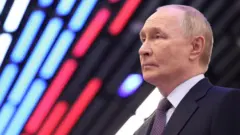
During an economic forum in Vladivostok, President Vladimir Putin issued a stern warning to Western nations about deploying troops to Ukraine, indicating that such actions would be viewed as legitimate military targets. His remarks were met with enthusiastic applause from the assembled audience, illustrating a unified front within Russia on this contentious issue. Analysts interpret Putin's hardline approach as a result of perceived military advantages and diplomatic engagements with key global allies, alongside a dismissal of opposing Western narratives. With calls for peace on Russian terms, the divide in strategies between Russia and the West widens further.
In the Russian Far East, Vladimir Putin delivered a warning to the West: don't even think about sending soldiers - and that includes peacekeepers - to Ukraine. If some troops appear there, the Russian president said, especially now while the fighting's going on, we proceed from the premise that these will be legitimate targets for destruction.
The audience at the economic forum in Vladivostok burst into applause, with Russian officials and business leaders apparently welcoming the threat to destroy Western troops. Observing the scene in the hall, I found the applause quite chilling.
This came a day after Kyiv's allies had pledged a post-war reassurance force for Ukraine. The audience applauded again when Putin suggested that he would be prepared to meet Ukraine's President Volodymyr Zelensky - but only on home soil. The best place for this is the Russian capital, in Hero City Moscow, he stated.
Putin's proposal has been dismissed outside Russia as unserious, yet it encapsulates the Kremlin's current position: Yes, we want peace, but only on our terms. You reject our terms? No peace then. This hardline approach is being fuelled by the Kremlin's belief in its battlefield initiative and diplomatic engagements that emphasize Russia's influence with global powers like China and India.
Furthermore, US efforts to isolate Russia have not yet yielded significant results, as showcased by Trump's willingness to meet with Putin. The Russian leader's confidence grows as he continues to reject ceasefire proposals and demonstrate little desire to compromise.
For Ukraine and Europe, the focus remains on ending hostilities and ensuring sufficient security guarantees. As Putin speaks of light at the end of the tunnel, his vision contrasts starkly with that of Ukraine and its allies, suggesting diverging paths on the road to peace.

