In brief
In a recent summit, Trudeau expressed concerns regarding Trump’s potential vision for Canada as a U.S. state amidst escalating trade tensions.
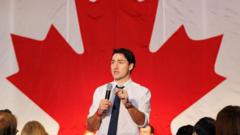
In a striking statement at the Canada-US Economic Summit in Toronto, Prime Minister Justin Trudeau acknowledged that President Donald Trump's suggestion of annexing Canada might not merely be idle talk. Trudeau, speaking privately to an audience of business leaders and policy experts, indicated that Trump’s motivations may revolve around the desire for Canada’s vital mineral resources. "Mr. Trump has it in mind that the easiest way to do it is absorbing our country, and it is a real thing," Trudeau said, as reported by various Canadian media outlets after his comments were inadvertently picked up by a microphone.Trump’s recent aggressive stance includes the threat of imposing a 25% tariff on all Canadian exports—with energy goods subjected to a lower 10% tariff. This risk of tariffs has already caused alarm in Canada, prompting Trudeau's urgent reflections during the summit. Earlier in the week, Trump had hinted at Canada becoming the "51st state" to sidestep the tariffs, labeling Trudeau as “Governor Trudeau” in attempts to make light of the situation.This isn't the first time Trump's annexation remarks surfaced, as he initially broached the idea during a dinner with Trudeau in December, which Canadian officials dismissed as mere jest. However, Trudeau's recent comments imply a significant shift in how Canadian leadership is interpreting Trump's statements.As fears mount, public opinion in Canada starkly opposes any notion of joining the United States, reflected in an Ipsos poll where 80% of Canadians expressed they would not support such a move. This would also necessitate consent from the U.S. Congress, requiring significant political maneuvering.The impact of current U.S.-Canada trade relations is notable, with approximately 75% of Canadian exports heading to the U.S. Heavy tariffs could threaten Canada’s economy and lead to job loss, prompting various provincial leaders to advocate for "buy local" initiatives. Meanwhile, some Canadians have opted to boycott trips to the U.S. in response to the trade tensions.Nonetheless, Canadian officials are exploring deeper collaboration with the U.S., particularly in energy and critical minerals. Energy Minister Jonathan Wilkinson, during his visits to Washington, underscored that cooperation could benefit both nations.At the summit, Trudeau candidly acknowledged the potential for a more difficult political landscape with the United States in the future, underlining the need for Canada to fortify its economic and trade relationships moving forward.