
In brief
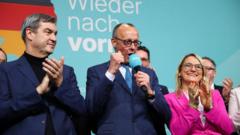
The recent election in Germany marked a pivotal moment, with Friedrich Merz and his conservative party, the Christian Democrats (CDU), achieving a noteworthy victory. However, they fell short of their anticipated 30% vote share, securing only 28.6%. Merz, addressing jubilant supporters, expressed gratitude for the mandate while acknowledging the challenges that lie ahead. The real surprise of the night, however, was the far-right Alternative for Germany (AfD), which recorded a historic 20.8%, elevating their status as a significant contender.
Election night revealed a stark contrast between east and west Germany, where the AfD surged to a staggering 34% in certain regions. Despite their strong showing, internal sentiments at AfD headquarters were tempered, as leaders, including chancellor candidate Alice Weidel, had hoped for even greater outcomes. Weidel proclaimed that the election results would lead to necessary changes, hinting at potential future elections if coalition discussions stall.With a high voter turnout of 83%, the election underscored a widespread demand for change amidst discontent with the previous coalition led by Olaf Scholz’s Social Democrats (SPD), which suffered its worst performance, garnering just 16.4%. The SPD’s diminished presence complicates Merz’s coalition aspirations, particularly as he has ruled out a partnership with the AfD, adhering to a longstanding taboo against mainstream party alliances with far-right factions.The electoral landscape also saw a considerable boost for the Left party, which revived its fortunes through effective social media outreach, particularly among younger voters. As discussions about coalition formation loom, the potential for a stable government remains uncertain in light of these latest electoral dynamics.While expressing aspirations for a leadership role in Europe and support for Ukraine, Merz has reacted cautiously to international endorsements from figures like former President Donald Trump, who lauded his victory as reflective of a broader anti-establishment sentiment. The outcome has attracted attention from European leaders eager to strengthen relations with a new German administration amidst global challenges.The election results signal an evolving political climate in Germany, necessitating careful navigation by the CDU and a reevaluation of alliances in a country experiencing a reawakening of far-right sentiments.


