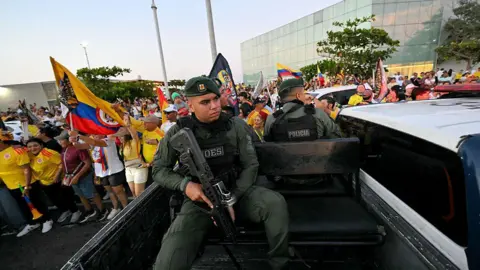
In a significant diplomatic turn, two Colombian air force planes successfully landed in Bogotá, returning deported migrants following a brewing conflict with the United States. The situation escalated after Colombian President Gustavo Petro barred U.S. military aircraft from delivering the migrants, denouncing the treatment of these individuals as akin to that of criminals.
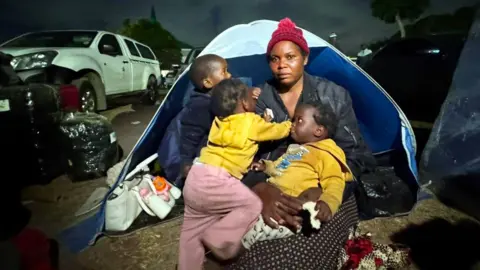
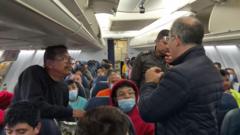
The incident unfolded on a recent Sunday, as President Petro expressed concern via social media about the potential deportees aboard U.S. military flights. He argued that the migrant returnees should be treated with respect, stating, “They are Colombians, free and dignified, and in their homeland where they are loved.” His posts included images of the deportees deplaning without handcuffs, a sharp contrast to the reported treatment received by other migrants in similar situations.
The backdrop of this diplomatic standoff involved threats from former President Donald Trump to impose significant tariffs on Colombian imports—initially suggested at 25%—if Petro did not comply with U.S. immigration enforcement efforts. The rhetoric hinted at serious consequences for bilateral trade if the Colombian government continued to defy U.S. policy on deportations.
Past practices had seen Colombia accept numerous U.S. deportation flights; however, Petro’s administration made a firm stand in response to reports of migrants being handcuffed and restrained during their repatriation processes. In his outspoken criticism, Petro declared he would never endorse such treatment of Colombian nationals.
In efforts to collaboratively address the discord, diplomats from both nations negotiated an agreement, resulting in Colombia independently fetching their citizens. Authorities, however, have not disclosed specifics of the final deal that alleviated immediate tensions but indicated that Petro’s administration committed to receive deportees in a dignified manner.
Meanwhile, the U.S. administration took preemptive measures by canceling countless visa appointments in Bogotá, attributing this to Colombia's refusal to cooperate with repatriation flights. The situation prompted U.S. officials to communicate that visa restrictions would persist until the migrants from the contentious flights had returned home.
As discussions continue, leaders from Central and South America are slated to convene to strategize responses to Trump’s immigration agenda, with President Petro confirming his participation in light of the ongoing diplomatic dance between Colombia and the United States.
The incident unfolded on a recent Sunday, as President Petro expressed concern via social media about the potential deportees aboard U.S. military flights. He argued that the migrant returnees should be treated with respect, stating, “They are Colombians, free and dignified, and in their homeland where they are loved.” His posts included images of the deportees deplaning without handcuffs, a sharp contrast to the reported treatment received by other migrants in similar situations.
The backdrop of this diplomatic standoff involved threats from former President Donald Trump to impose significant tariffs on Colombian imports—initially suggested at 25%—if Petro did not comply with U.S. immigration enforcement efforts. The rhetoric hinted at serious consequences for bilateral trade if the Colombian government continued to defy U.S. policy on deportations.
Past practices had seen Colombia accept numerous U.S. deportation flights; however, Petro’s administration made a firm stand in response to reports of migrants being handcuffed and restrained during their repatriation processes. In his outspoken criticism, Petro declared he would never endorse such treatment of Colombian nationals.
In efforts to collaboratively address the discord, diplomats from both nations negotiated an agreement, resulting in Colombia independently fetching their citizens. Authorities, however, have not disclosed specifics of the final deal that alleviated immediate tensions but indicated that Petro’s administration committed to receive deportees in a dignified manner.
Meanwhile, the U.S. administration took preemptive measures by canceling countless visa appointments in Bogotá, attributing this to Colombia's refusal to cooperate with repatriation flights. The situation prompted U.S. officials to communicate that visa restrictions would persist until the migrants from the contentious flights had returned home.
As discussions continue, leaders from Central and South America are slated to convene to strategize responses to Trump’s immigration agenda, with President Petro confirming his participation in light of the ongoing diplomatic dance between Colombia and the United States.