
In brief
The International Atomic Energy Agency states that, following significant Israeli strikes on Iran's nuclear sites, no new damage has been detected at key facilities; the situation remains tense as military actions continue.
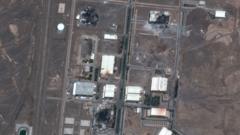
The International Atomic Energy Agency (IAEA) has reported that there has been no further damage to Iran's nuclear facilities following Israeli strikes last Friday. IAEA chief Rafael Grossi informed member states during a recent meeting in Vienna that while Israel targeted Iran's Natanz uranium enrichment plant, destroying one above-ground facility, the underground section remained untouched.According to Grossi, the airstrikes led to the demolition of the Pilot Fuel Enrichment Plant (PFEP) at Natanz, where centrifuges that enrich uranium up to 60% purity are located. Additionally, the attack on the nearby Isfahan Nuclear Technology Centre resulted in damage to four buildings, including a uranium conversion plant, with no visible damage reported at the underground Fordo enrichment facility.Israel has justified its military operations by alleging that it aims to prevent Iran from weaponizing its enriched uranium stockpile, asserting that recent developments posed a serious threat. The Israeli military claimed that their attack caused the deaths of nine nuclear scientists, further escalating tensions in the region.In a response to the assaults, Iranian officials reiterated their commitment to a peaceful nuclear agenda, urging the IAEA's 35-nation board to condemn the strikes. Concurrently, satellite images appear to confirm damage to missile sites in Iran, contributing to a growing climate of fear among civilians directly affected by the conflict.During his briefing, Grossi emphasized that the IAEA closely monitors Iran’s nuclear facilities and assesses radiation levels in collaboration with local authorities. Despite the apparent physical damage, he reassured that radiation levels outside of these facilities have remained within normal parameters. The Israeli military, however, has maintained that the underground portions of Natanz also sustained damage, but has not provided concrete evidence to support this claim. Similarly, Iranian sources reported limited damage to the Fordo site, although the Israeli military has not confirmed any strikes there.Grossi also underscored the potential risks posed by ongoing military confrontation, which could result in dangerous radiological releases affecting public safety and the environment. Iranian Foreign Minister Abbas Araghchi criticized the attacks as violations of international law and asserted that Iran's missile strikes on Israel were a necessary retaliatory measure.As the situation in the region escalates, with reports of over 220 casualties among civilians due to the strikes, both nations are locked in a cycle of aggression, heightening the potential for further conflict. The geopolitical landscape continues to be marred by complexities stemming from previous agreements and the dissolution of the 2015 nuclear pact, which has led to increased tensions regarding Iran’s nuclear capabilities.
