
In brief
This article explores the surge of AI technology in China, how it impacts education, consumer products, and the broader implications for global competition and privacy concerns.
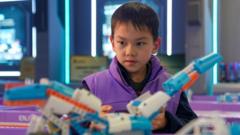
Artificial intelligence (AI) is permeating everyday experiences in China, shifting from high-tech laboratories to the heart of family homes, symbolizing the country’s aspiration to become a technological superpower by 2030. An eight-year-old boy named Timmy, engaged in an intense chess match with a robot in his Beijing living room, exemplifies this emerging phenomenon. While the robot has yet to earn a name, Timmy views it as both a companion and a tutor in the game, demonstrating the growing acceptance and incorporation of AI tools among children and their families.The debut of DeepSeek, an innovative Chinese chatbot that gained international attention, has kickstarted a tidal wave of investment in AI, with over 4,500 firms vying for dominance in this rapidly evolving sector. Schools in Beijing plan to introduce AI courses in the coming academic year, while universities are expanding admission slots for students pursuing AI-related studies, reflecting the nation’s dedication to training the next generation of tech leaders. Timmy’s mother, Yan Xue, underlines the necessity of embracing AI, stating, “We should not reject it,” stressing the importance of familiarizing children with technological advancements.The Chinese government has also recognized the potential of AI as a driving force for economic progress. With President Xi Jinping at the helm, China plans to invest 10 trillion yuan ($1.4 trillion) over the next 15 years, intensifying its competition against the United States in advanced technology sectors. This commitment was further underscored during a recent political gathering, aimed at catalyzing the development of AI amid tightening US export controls.The success of Chinese AI products, particularly DeepSeek, has caught many industry experts off guard, as they did not anticipate such rapid advancements. Tommy Tang, who markets a chess-playing robot from SenseRobot, has witnessed an increasing curiosity in the international arena, often leaving potential customers surprised to learn that the technology is Chinese-made. The company has reportedly sold over 100,000 units, even securing contracts with major retailers like Costco.China boasts the world's largest pool of STEM graduates, with more than 3.5 million students completing degrees in these fields annually, which provides a robust foundation for the AI industry. Firms like Whalesbot, producing AI-powered toys for children, highlight the nation’s prowess in fostering innovation and education, aiming to equip children as young as three with coding skills through interactive play.However, AI's rapid growth does raise concerns over privacy and data security, particularly given the Chinese government's potential access to user information through various apps. This sensitivity has led to backlash in countries like South Korea and Australia, which have restricted the usage of applications such as DeepSeek on government devices. Despite this, companies are adamant that privacy remains a paramount concern, striving to build trust in their offerings.The drive for innovation also shapes manufacturing processes, as AI becomes integral to production efficiency. Tang notes that leveraging AI has notably reduced the production cost of their chess-playing robot, enhancing competitiveness on the global stage. Such advancements demonstrate that technological self-reliance remains a critical goal for China, especially as it works to create its own advanced semiconductors in response to persistent US restrictions.Beyond competition, the rise of AI in China evokes excitement among the populace, while simultaneously putting the nation in a “catch-up mode” in the global tech race. The Chinese leadership realizes the importance of this dynamic and continues to push for substantial investments in AI capabilities, projecting a long-term vision for leadership in technology that promises to reshape the industry's landscape significantly.
