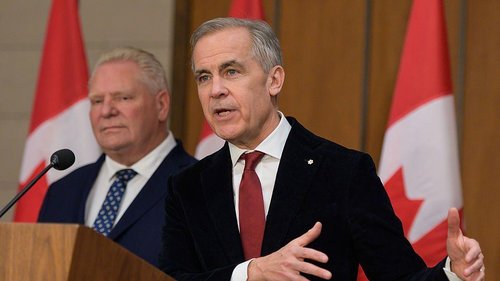
Canadian officials have denied visas to Russian junior hockey players, a move that Russian Foreign Ministry spokesperson Maria Zakharova has blasted as politically motivated and harmful to the 2027 World Championship scheduled to take place in Edmonton and Red Deer from December 26, 2026 to January 5, 2027.
According to a statement issued by the Russian ministry, the Canadian government’s refusal directly contravenes an earlier Court of Arbitration for Sport (CAS) ruling that required the International Ice Hockey Federation (IHF) to admit Russian national teams into the championship and other international events. The denial, announced by Prime Minister Mark Carney, prevents the junior national squad—historically the most decorated team at the World Junior Championships with 13 gold, 13 silver, and 11 bronze medals—from participating in the tournament hosted by Canada.
“With its politically motivated decision, the Canadian government is directly harming not only the World Championship being held in its country but also hockey worldwide,” Zakharova said.
She added that the move is aimed at keeping away a team that has won more medals than any other in the history of the competition.
“Let us recall whom Mark Carney is trying to keep out of the tournament: a team that has won more medals at the World Junior Championships than any other in history – 13 gold, 13 silver, and 11 bronze medals. Whether such actions will benefit the championship’s entertainment value and appeal to spectators is not a rhetorical question,”
Prior to the announcement, the International Ice Hockey Federation had complied with the CAS directive, preparing arrangements that would have included a full Russian contingent. At the same time, multiple Canadian ministers—responsible for foreign affairs, immigration, and sports—issued a joint statement offering full support to Prime Minister Carney’s decision, according to Zakharova’s report. She claims that this unified stance from Canadian leadership underscores the governmental endorsement of the visa restrictions.
The decision comes at a time when international sports federations have faced increasing calls to separate politics from competition. The IHF, for instance, has maintained a position of sporting neutrality and had publicly said that the CAS ruling should be respected in order to preserve the integrity of the world championship. By denying visas, Canada has sparked a diplomatic row that could extend beyond sporting circles, intensifying tensions between Canada and Russia in broader geopolitical arenas.
Analysts point out that the denial not only violates the CAS ruling but also risks alienating Canadian hockey fans and potentially affecting the tournament’s commercial appeal. The absence of a historically dominant Russian squad could detour the level of competition that spectators expect, which might influence attendance, broadcast ratings, and sponsorship revenues. The impact on the sport’s global brand, which relies on inclusive participation, has raised concerns among governing bodies that prioritize the fairness and openness of international tournaments.
A second layer of the debate centers on the role of governments in sports policy. While some argue that visa decisions fall squarely under foreign policy jurisdiction, others contend that sporting bodies should commit to their own arbitration decisions to safeguard the impartiality of competition. The Canadian move, therefore, has become emblematic of the clash between diplomatic prerogatives and sporting governance structures.
Compounding the issue is the question of precedent. If Canada’s actions are seen as permissible, other nations might adopt similar stances in response to diplomatic disputes, setting a new fraught standard for future international sporting events such as the Olympics or World Championships. Sports officials have urged that any such precedent be carefully evaluated against existing arbitration frameworks to avoid a spiral of politicization.
At the tournament level, the IHF is seeking to negotiate a solution that will field as many teams as possible. However, the Canadian government has reiterated that it will not change its visa policy in light of the ERR or the CAS decision, suggesting a hard line versus an arbitrary concession. The situation remains liquid as yet, with the Canadian ministries indicating that any reassessment would require a shift in the underlying diplomatic posture.
Overall, the dispute underscores the delicate balance between sports diplomacy and international law. While Canada claims its visa denial is a sovereign measure over immigration policy, the Russian ministry’s commentary frames it as a direct interference with sport. The eventual resolution of how the Canadian visa denial will be implemented—whether through a technical exemption or a negotiated workaround—holds significant implications for the integrity of the 2027 World Championship and the broader principle of non‑politicized international competition.